AI in Business & Marketing: Practical Ways It Is Changing How Companies Grow
Running a business has always involved a certain amount of guesswork. You launch a campaign, wait for the numbers, and hope customers respond. You hire more people when workloads grow. You answer the same questions repeatedly because that’s simply part of the job.
That approach is changing fast.
AI in business and marketing is helping companies understand customers, automate repetitive work, and make decisions with stronger evidence. It’s not limited to global brands with huge technology budgets, either. A small online store, local agency, or independent consultant can now use tools that were once available only to large corporations.
The real opportunity isn’t replacing people. It’s giving them more time to think, create, solve problems, and build genuine customer relationships.
Table of Contents
- Why AI Has Become a Business Priority
- Turning Business Data Into Better Decisions
- Personalization That Feels Relevant
- Faster Content Without Losing the Human Voice
- How Automation Improves the Customer Journey
- Smarter Advertising and Lead Generation
- Where Businesses Commonly Get It Wrong
- The Real Advantage Is Better Judgment
Why AI Has Become a Business Priority
A few years ago, many companies treated AI as an interesting experiment. It sounded useful, but it didn’t always feel necessary. Today, the conversation is different because the technology has become easier to access and much more practical.
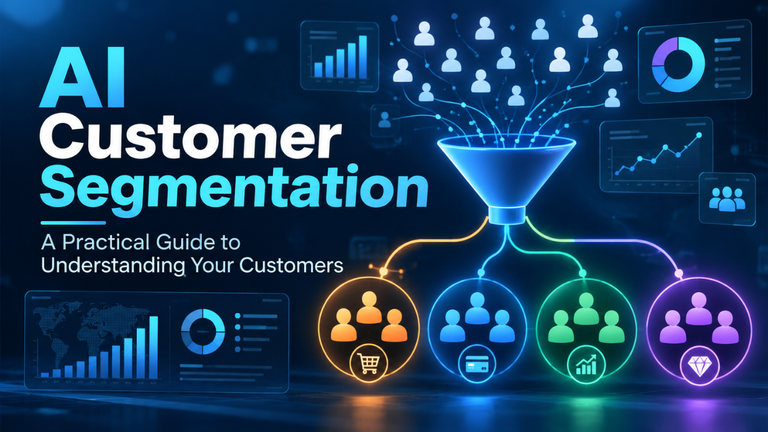
Businesses are using it to summarize meetings, analyze customer feedback, predict product demand, organize sales leads, and handle basic support requests. Marketing teams use it to study campaign performance, create audience groups, and identify which messages are likely to attract attention.
The appeal is easy to understand: most businesses are buried in small tasks.
Imagine a marketing manager who receives reports from five advertising platforms every Monday. They may spend half the morning downloading files, comparing numbers, and building a summary. An automated system can collect that information and highlight the important changes before the manager opens their laptop.
That doesn’t make the manager less valuable. It allows them to focus on why sales dropped, what customers are doing differently, and how the next campaign should respond.
Here’s the thing: saving time is only the first benefit. The bigger advantage comes from noticing useful patterns that people might miss.
Turning Business Data Into Better Decisions
Companies collect enormous amounts of information through websites, sales systems, customer service conversations, social media, and email campaigns. Yet much of that data sits unused because teams don’t have enough time to examine it properly.
AI can sort through those records and turn scattered information into practical insights.
A retailer, for example, might discover that customers who buy running shoes in March often return for fitness accessories within three weeks. That insight could lead to a well-timed follow-up email featuring socks, water bottles, or training equipment. The offer feels relevant because it reflects an actual buying pattern.
Similar analysis can help companies forecast demand. A restaurant may use previous orders, seasonal trends, local events, and weather data to estimate how much food it will need over the weekend. Better forecasting reduces waste without leaving customers disappointed.
Still, predictions aren’t guarantees. A system can recognize what usually happens, but it can’t fully understand sudden cultural changes, unusual customer behavior, or unexpected market events. Smart businesses treat data-driven recommendations as helpful evidence, not unquestionable instructions.
Numbers should support judgment, not replace it.
Personalization That Feels Relevant
Customers expect businesses to understand what they want. At the same time, they dislike feeling watched. That makes personalization one of the most useful—and sensitive—applications of AI in business and marketing.
Good personalization makes the customer’s experience easier. Poor personalization feels intrusive.
Think about an online clothing store. A returning visitor who previously browsed men’s winter jackets shouldn’t have to search through hundreds of unrelated products again. The website can place suitable jackets near the top, remember the shopper’s preferred size, and recommend items within a realistic price range.
That’s useful.
Now imagine the same customer receives six emails in two days, each announcing that the company noticed them looking at a particular jacket. The technology may be working perfectly, but the experience feels uncomfortable.
Effective personalization needs restraint. Businesses should use customer information to reduce unnecessary steps, provide better recommendations, and send more relevant messages. They shouldn’t use every available piece of data simply because they can.
Trust matters more than a temporary increase in clicks.
Faster Content Without Losing the Human Voice
Marketing teams constantly need fresh material: emails, product descriptions, social posts, campaign ideas, landing pages, video scripts, and sales documents. Producing all of it can become exhausting, especially for a small team.
Modern tools can help with early research, outlines, alternative headlines, basic drafts, and content variations. A marketer might create three versions of an email introduction for different customer groups, then edit each one to match the company’s voice.
That last step is important.
Unedited automated content often sounds polished but empty. It may use familiar phrases, make vague claims, or explain a simple point for far too long. Readers can sense when nobody has made a real decision about what the message should say.
Strong content still requires human experience. Someone needs to choose the angle, check the facts, remove weak language, and add details that reflect real customer concerns.
Let’s be honest: producing more content isn’t automatically a win. One useful guide based on genuine experience can bring better results than twenty forgettable posts. Speed helps only when the final work remains accurate, specific, and worth reading.
How Automation Improves the Customer Journey
Customers rarely see a company as separate departments. They don’t care whether their problem belongs to sales, marketing, billing, or support. They simply expect a clear and reasonably quick answer.
Automation can connect those parts of the customer journey.
Suppose someone downloads a pricing guide from a software company. The system can record which service interested them, send a relevant follow-up message, and notify a salesperson if the person returns to the pricing page several times. The salesperson begins the conversation with useful context instead of asking the customer to repeat everything.
Customer service can benefit in a similar way. A chatbot may answer common questions about opening hours, delivery tracking, return policies, or account settings. Complicated cases can then move to a human agent along with a summary of the conversation.
That handover is where many businesses stumble. Customers become frustrated when they explain a problem to an automated assistant and then have to start again with a real person.
A well-designed system knows its limits. It handles simple requests quickly and makes it easy to reach a human when the issue becomes emotional, unusual, or financially important.
Smarter Advertising and Lead Generation
Digital advertising can burn through money surprisingly quickly. A broad audience, weak message, or poorly chosen bidding strategy may consume the budget without producing meaningful sales.
AI-powered advertising platforms analyze signals such as browsing behavior, location, device type, interests, and previous interactions. They use that information to decide who is most likely to respond and when an advertisement should appear.
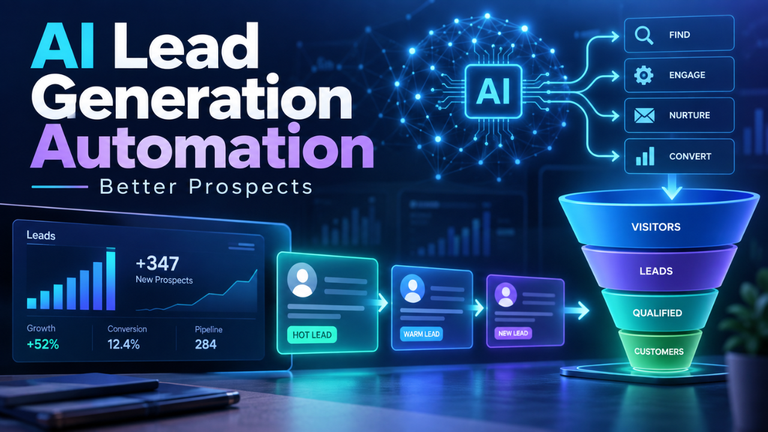
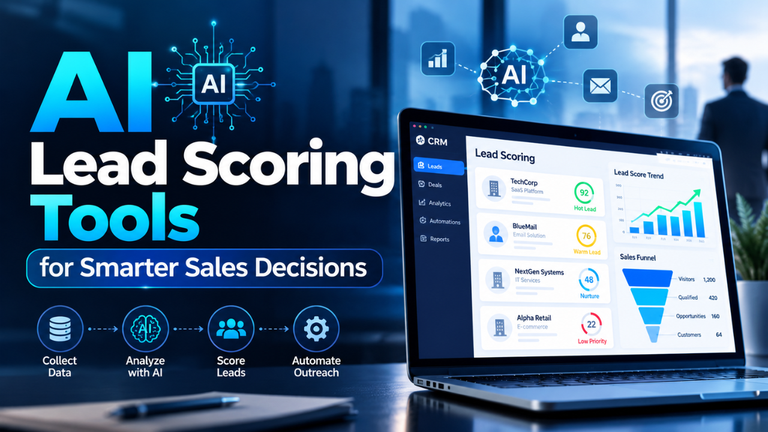
Sales teams can also use predictive scoring to organize leads. Instead of contacting every person in the same order, they can prioritize those showing stronger buying signals.
Picture a property agency receiving 200 enquiries during a busy week. Some visitors casually viewed one listing, while others checked mortgage information, saved several homes, and requested viewing times. Lead scoring helps the agency identify the people who may be ready for a serious conversation.
However, targeting doesn’t rescue a weak offer. If the product is overpriced, the landing page is confusing, or the advertisement makes unrealistic promises, better technology will only expose those problems faster.
The basics still count: a clear offer, credible proof, and a smooth path from interest to action.
Where Businesses Commonly Get It Wrong
The most common mistake is adopting a tool before identifying the actual problem. A company hears that automation is important, buys an expensive platform, and then searches for ways to use it. Six months later, the team has another complicated dashboard and little improvement to show for it.
A better starting point is a frustrating, measurable task.
Maybe support agents spend ten hours each week categorizing tickets. Perhaps the marketing team can’t explain why customers abandon the checkout page. Or sales representatives waste time contacting leads that were never qualified.
Choose one problem, establish the current result, and test whether the new approach improves it.
Businesses also need to protect customer data, check outputs for errors, and remain alert to bias. A model trained on incomplete historical information may repeat old assumptions. If nobody reviews its recommendations, those assumptions can quietly influence hiring, pricing, advertising, or customer service decisions.
Clear responsibility prevents that. Someone should always know what the system is doing, what information it uses, and who steps in when something goes wrong.
The Real Advantage Is Better Judgment
AI in business and marketing works best when it quietly improves everyday decisions. It can reveal patterns, remove repetitive tasks, and help teams respond faster, but it can’t define a company’s values or build customer trust on its own.
The companies likely to benefit most won’t be the ones using the greatest number of tools. They’ll be the ones asking better questions. Where are we wasting time? What do customers genuinely need? Which decisions would improve if we had clearer information?
Start there. Automate carefully, keep people involved, and measure whether the customer experience actually gets better. Technology changes quickly, but good business judgment still provides the direction.