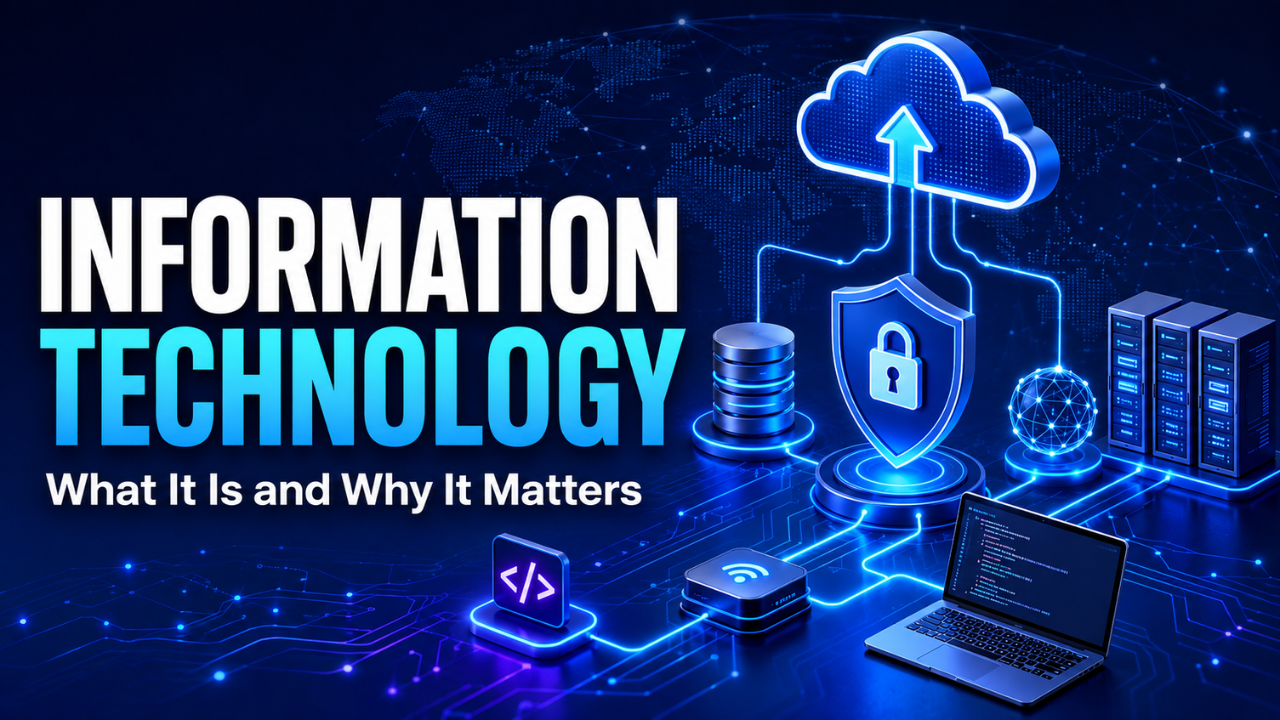
Information Technology: What It Is and Why It Matters
Information technology is so deeply woven into daily life that we often stop noticing it. You unlock your phone, check a bank balance, send a file to a coworker, or order dinner online. Each action depends on several technology systems working quietly in the background.
Most people think information technology is simply about computers. Computers are part of it, of course, but the full picture is much wider. It includes software, networks, databases, cloud services, cybersecurity, technical support, and the people who keep these systems running.
Here’s the thing: information technology isn’t valuable because the machines are impressive. It’s valuable because it helps people store information, communicate quickly, solve problems, and complete work with less effort.
Table of Contents
- What Information Technology Really Means
- The Main Parts of an IT System
- How Information Technology Appears in Daily Life
- Why Modern Businesses Depend on IT
- The People Behind the Technology
- Cybersecurity and the Need for Digital Protection
- Common Challenges in Information Technology
- Building a Career in Information Technology
- Where Information Technology Is Heading
- The Real Value of Information Technology
What Information Technology Really Means
Information technology, often shortened to IT, is the use of computers and digital systems to create, store, process, protect, and exchange information. That definition may sound technical, but the basic idea is simple: IT helps information move to the right place at the right time.
Consider a small medical clinic. The receptionist uses a computer to schedule appointments. Doctors open patient records through secure software. The billing team sends digital claims to insurance companies, while automatic backups protect important files.
All those connected activities are part of information technology.
IT is different from general technology. A washing machine is technology, but it isn’t usually considered an IT system. A smart washing machine connected to an app, however, uses information technology because it collects data and communicates through a network.
That difference matters. IT focuses mainly on information and the systems used to manage it.
The Main Parts of an IT System
Every working IT system depends on several connected elements. Hardware is the physical part: computers, servers, routers, printers, storage drives, and mobile devices. Without hardware, software has nowhere to run.
Software gives instructions to the hardware. It includes operating systems, mobile apps, accounting programs, web browsers, and business management platforms. A laptop may be powerful, but it won’t do much without useful software.
Networks allow devices to communicate. Your home Wi-Fi is a small network. A large company may operate a much more complex network connecting hundreds of employees, several offices, remote workers, and online services.
Data is another essential part. Customer names, payment records, product details, medical files, and employee documents are all forms of data. Databases organize this information so people can search, update, and use it efficiently.
Then there are people. This part is easy to overlook. Technology doesn’t install, maintain, secure, or repair itself. Skilled professionals plan the system, support users, fix problems, and decide how the technology should serve the organization.
How Information Technology Appears in Daily Life
You probably use IT before breakfast.
Your phone receives messages through a mobile network. A weather app collects information from remote servers. A map calculates the best route based on your location and current road conditions. Even a simple alarm may synchronize with other devices through an online account.
Banking offers another clear example. Years ago, people often had to visit a branch to transfer money or check an account. Now, the same task may take less than a minute. Behind that convenience sits a complicated system of databases, security controls, networks, and verification tools.
Education also relies heavily on IT. Students can attend remote classes, submit assignments online, access digital libraries, and work together on shared documents. Teachers can record grades and communicate with parents without passing around piles of paper.
The technology often becomes most noticeable when it stops working. Imagine reaching a store checkout and hearing, “Our system is down.” Products are still on the shelves and employees are still present, yet the business may struggle to process a single sale. That short moment shows how dependent everyday services have become on reliable IT.
Why Modern Businesses Depend on IT
Let’s be honest: very few businesses could operate effectively without information technology.
A small café might use a digital payment terminal, an online delivery platform, security cameras, and software that tracks daily sales. A large international company may depend on thousands of connected devices and specialized applications.
IT helps businesses communicate faster. Employees can share documents, hold video meetings, and respond to customers from different locations. It also improves organization. Instead of searching through a crowded filing cabinet, a worker can find a digital record in seconds.
Better information can lead to better decisions too. Suppose a shop owner notices through sales reports that cold drinks sell quickly on Friday afternoons. The owner can order more stock before the weekend rather than guessing what customers might buy.
Automation also saves time. A system can send invoices, update inventory, calculate working hours, or notify customers when an order has shipped. This doesn’t remove the need for people. It allows them to spend less time on repetitive tasks and more time on work that requires judgment.
Still, buying more technology doesn’t automatically improve a business. The right system should solve a real problem. Expensive software that employees don’t understand can create more frustration than value.
The People Behind the Technology
Information technology is a broad field, and not everyone working in it has the same role.
IT support specialists help users when something goes wrong. They may reset passwords, repair computers, install applications, or troubleshoot network connections. Patience is just as important as technical knowledge in this job. A user who has lost an important file doesn’t need confusing jargon; they need calm, clear help.
Network administrators manage connections between devices and services. Database administrators organize and protect valuable data. Software developers build the programs people use, while systems analysts study business needs and recommend suitable technical solutions.
Project managers keep large technology projects organized. Cybersecurity professionals focus on protecting systems from attacks, theft, and unauthorized access. Cloud specialists help organizations run services through remote computing infrastructure rather than depending entirely on local machines.
The roles are different, but they share one goal: keeping information useful, available, and secure.
Cybersecurity and the Need for Digital Protection
The more information we store digitally, the more carefully we need to protect it.
A weak password may give someone access to private messages, business documents, or financial records. A convincing fake email can trick an employee into opening a harmful attachment. An outdated application may contain a security weakness that criminals can exploit.
Cybersecurity is the part of information technology focused on reducing these risks. It includes secure passwords, access controls, software updates, network monitoring, data encryption, backups, and staff training.
Small organizations sometimes assume they’re too unimportant to be targeted. That’s a dangerous belief. Attackers often prefer easier targets, and a small company with weak security may be more attractive than a large company with a trained security team.
Good protection doesn’t depend on one clever tool. It comes from several sensible habits working together. Regular backups, limited account permissions, careful email use, and timely updates can prevent many common problems.
People remain a major part of security. A perfectly configured system can still be exposed if someone shares a password or clicks a suspicious link without checking it.
Common Challenges in Information Technology
IT solves problems, but it also creates responsibilities.
Systems need regular maintenance. Software becomes outdated, equipment wears down, and business needs change. A solution that worked well for ten employees may become slow and difficult when the company grows to one hundred.
Cost is another concern. Organizations must pay for devices, software subscriptions, internet access, maintenance, training, and security. Choosing the cheapest option can be risky, but spending heavily without a clear plan is no better.
Compatibility can cause trouble as well. New software may not work properly with an older database or operating system. Moving information from one platform to another may take more time than expected.
Then there’s downtime. If a server fails or an internet connection disappears, employees may be unable to work. Strong IT planning includes backup systems and a clear recovery process, not just hope that nothing will break.
Privacy deserves attention too. Organizations often collect personal information from customers and employees. They must understand what they’re collecting, why they need it, who can access it, and how long it should be kept.
Building a Career in Information Technology
Information technology can suit people with very different strengths. Some enjoy solving technical puzzles. Others prefer working with users, managing projects, studying data, or improving business processes.
A university degree can help, but it isn’t the only route into the field. Many people begin with practical courses, professional certifications, internships, or entry-level support jobs. Personal projects can also build useful experience.
For example, someone might create a small home network, build a basic website, practice installing operating systems, or learn how to secure a test computer. These projects demonstrate curiosity and problem-solving ability.
Technical skills matter, but communication matters more than many beginners expect. An IT professional often needs to explain a complicated issue to someone who has little technical knowledge. Clear writing, careful listening, and patience can turn a capable technician into a trusted colleague.
The field also changes quickly, so learning never really stops. That can feel demanding, but it’s also what keeps the work interesting.
Where Information Technology Is Heading
Information technology continues to move toward greater connection, flexibility, and convenience. More organizations are using cloud services so employees can access approved tools and files from different locations.
Smart devices are also becoming common in homes, factories, farms, hospitals, and transport systems. These devices collect and exchange information, helping people monitor equipment, reduce waste, and respond to problems earlier.
Remote work has changed expectations too. Employees want secure access to company systems without being tied to one office desk. IT teams now have to balance convenience with control, especially when people use several devices and work from different networks.
New tools will keep arriving, but the central question won’t change: does the technology genuinely help people? A system should make work clearer, safer, or more efficient. If it only adds complexity, it may not be progress at all.
The Real Value of Information Technology
Information technology isn’t just a department that fixes laptops when the Wi-Fi stops working. It supports communication, healthcare, education, banking, entertainment, transport, and almost every modern business process.
Its real value comes from connecting people with useful information. When an IT system is designed well, it fades into the background. Work feels easier, records remain organized, and people can focus on what they actually need to accomplish.
That’s the best way to understand information technology: not as a collection of machines, but as a practical system for helping people communicate, make decisions, and solve everyday problems.