
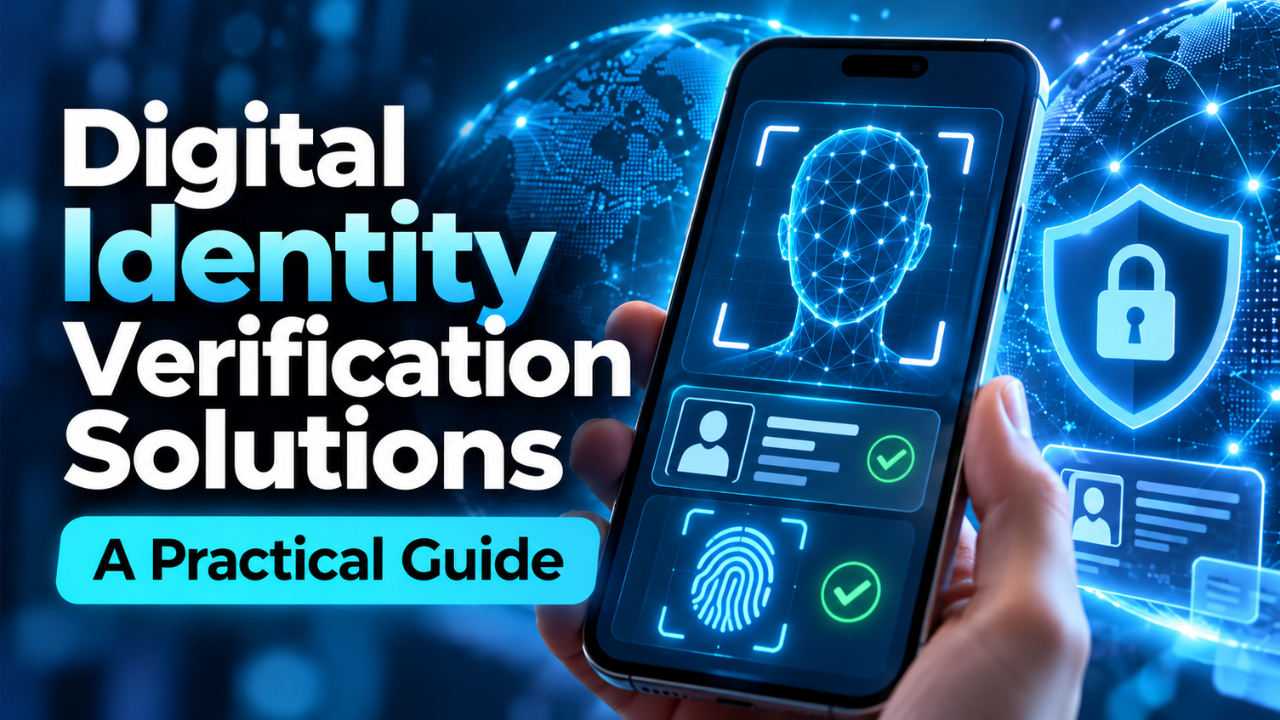
Digital Identity Verification Solutions: A Practical Guide
A new customer reaches the final step of signing up, then gets asked to photograph an ID, take a selfie, and wait. That moment can protect a business from fraud—or send a legitimate person straight to a competitor.
Digital identity verification solutions help organisations check whether a person is who they claim to be during an online interaction. They can speed up onboarding and make remote services safer, but no tool can guarantee that every identity is genuine. The useful question is how to get enough confidence for each situation while keeping the experience clear, private, and fair.
Table of Contents
- What Digital Identity Verification Solutions Do
- How a Verification Check Works
- The Checks Behind a Reliable Decision
- Where Businesses Use Identity Verification
- How to Choose a Solution
- Privacy, Fairness, and the Human Fallback
- What to Measure After Launch
- What’s Changing in Digital Identity
- The Practical Takeaway
What Digital Identity Verification Solutions Do
At the simplest level, a person makes a claim—“I’m Sam, I’m over 18,” or “I’m the account holder”—and a service checks evidence for that claim. A digital identity verification solution coordinates those checks online. Depending on the business and the risk, it might inspect an identity document, compare a selfie with the document photo, validate details against trusted records, or ask for a stronger sign-in step.
It helps to separate three ideas that often get bundled together. Identity proofing checks evidence when an account is created. Authentication checks that the returning user controls the account, using a password, passkey, security key, or other factor. Federation lets one trusted identity provider confirm information to another service. NIST’s Digital Identity Guidelines treat these as related but distinct functions, which is a helpful way to plan a system.
How a Verification Check Works
Most online checks start when the user submits information or evidence. The screen may ask for a name and date of birth, then prompt the user to photograph an identity document. Software can read the document’s details, check whether its layout and security features look plausible, and compare the visible information with the details the user entered.
The service may then test whether the document appears to belong to the person holding it. A selfie can be compared with the document photo, and a liveness check may look for signs that the camera is seeing a live person rather than a static photograph or replay.
The result is usually a decision such as approve, reject, or review—not a magical declaration of truth. A clear match might pass automatically. A blurry image, name mismatch, unsupported document, or conflicting signal may go to a trained reviewer or trigger another step.
The Checks Behind a Reliable Decision
Document checks are often the visible part of the process. A good service should support the document types and countries your customers actually use, read key fields accurately, and identify signs of alteration or expiry.
Data checks can help confirm that details are plausible and consistent. They may compare a name, address, phone number, or date of birth with suitable sources. These checks need careful interpretation: people move, change names, use transliterated spellings, or share addresses. A mismatch can be a clue, but it is not proof of fraud on its own.
Biometric comparison and liveness checks can add confidence in remote onboarding, especially when opening a high-risk account. They also add sensitive data and another possible failure point. Device, network, and behavioural signals can help identify suspicious patterns, but they should generally inform a decision rather than silently determine it.
Where Businesses Use Identity Verification
Financial services use identity checks when opening accounts, processing certain transactions, or meeting customer due diligence requirements. Marketplaces may use them for sellers who receive payouts, while payment companies can check account holders before enabling higher-risk features. The goal is not to challenge every user constantly; it is to apply stronger checks at moments where impersonation or account abuse could cause real harm.
Other examples include age checks for restricted products, remote patient or client onboarding, employee access to sensitive systems, and confirming a person before an account recovery. A small online shop selling ordinary goods may need a light touch at checkout. A service that can move money or expose private records has a stronger reason to establish identity and secure later access.
There’s also a customer-service benefit when verification is designed well. If a person can confirm their identity securely from home, they may avoid mailing documents or repeating the same information to several departments.
How to Choose a Solution
Start with the harm you are trying to prevent. What could happen if a fraudster gets through? What happens if a legitimate customer is wrongly blocked? Those answers help determine whether you need a document and database check, a biometric step, stronger authentication, or a combination. NIST’s risk-based approach likewise separates assurance needs across identity proofing, authentication, and federation rather than treating every service as equally sensitive.
Next, test the real user journey. Try it with common and less common documents, different lighting, varied camera quality, and names with accents or multiple parts. Ask what happens when the scan fails, a customer cannot use a camera, or an account needs recovery.
Look closely at the provider’s data practices: what it collects, why it needs each field, how long it keeps raw images, who can access them, and how deletion works. Check its security controls, incident process, audit information, country coverage, integration options, and support for human review.
Finally, ask for evidence rather than relying on broad claims. Request performance results for document types and user populations like yours. Ask how the provider measures false accepts and false rejections, whether independent testing is available, and how it updates its checks as fraud patterns change.
Privacy, Fairness, and the Human Fallback
Identity checks often involve government documents, facial images, or other personal information. Collecting more than a service needs creates more data to secure and can make customers less willing to finish signup. The Federal Trade Commission has warned that biometric technologies raise privacy, security, and potential bias concerns; its statement on biometric information is a useful reminder to treat this data with care.
Tell people what you’re asking for and why. Keep access limited, set a retention period, and avoid keeping raw images “just in case” if they aren’t needed.
Fairness needs operational attention too. A face match can fail because of lighting, camera quality, disability, or differences in how a document records a person’s name. Monitor whether error and review rates vary across customer groups, and give people a clear way to retry or reach a person.
What to Measure After Launch
Don’t judge a solution only by how quickly it returns a decision. Track completion rate, time to finish, first-pass success, manual-review volume, abandonment, confirmed fraud, and the number of legitimate users who need help. Look at those measures by document type, region, device, and other relevant factors so an average does not conceal a weak spot.
Keep an eye on the full cost of a failed check. A low fraud rate may look good until support tickets and lost signups rise. Likewise, a high approval rate is not a win if suspicious accounts slip through. Review results regularly with teams from security, operations, customer support, and privacy.
What’s Changing in Digital Identity
Digital identity is gradually moving beyond the repeated upload of a photo ID. Reusable digital credentials and identity wallets may let a person present a verified attribute—such as age or a qualification—without handing over an entire document. That can make a check quicker and more private, provided the credential is trustworthy and the receiving service can validate it.
The European Commission says EU Member States are expected to make European Digital Identity Wallets available to citizens, residents, and businesses by the end of 2026. The wallets are intended to support access to public and private services and the storage and sharing of digital documents.
The direction is clear: verification will involve a wider mix of documents, data sources, authenticators, and user-controlled credentials. The practical challenge is choosing which evidence to trust, using only what is needed, and giving customers a workable alternative when a digital check does not fit.
The Practical Takeaway
Digital identity verification solutions work best when they match the check to the risk. They can reduce fraud and remove paperwork, but they also shape a person’s first impression of a service. Choose a system that explains its decisions, protects the data it handles, supports human review, and works for the people you want to serve. That balance—confidence without needless friction—is the real measure of a good verification process.


One Comment