
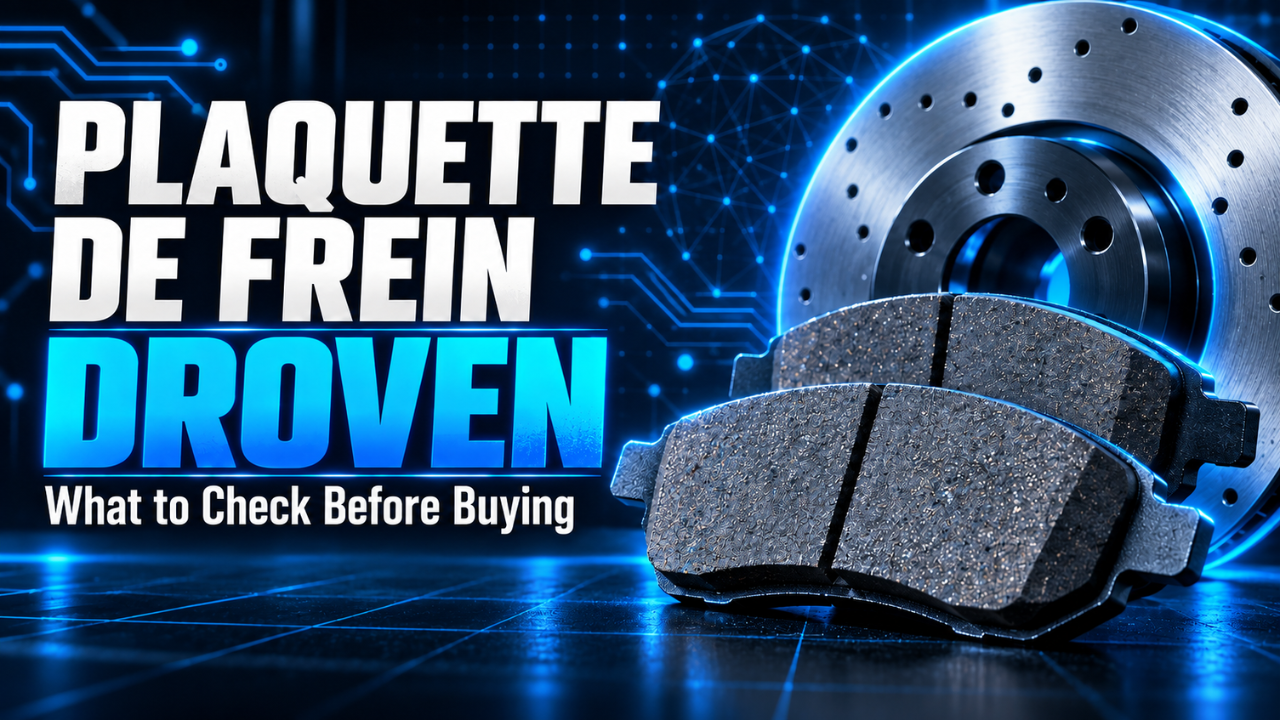
Plaquette de Frein Droven: What to Check Before Buying
A brake pad can look right in a seller’s photo and still be wrong for your car. That’s the frustrating part of shopping for replacement brakes: similar shapes, broad vehicle descriptions, and confident claims don’t always make the choice clearer.
If you’re searching for “plaquette de frein droven,” you probably want to know whether these pads fit your vehicle, whether they’re worth buying, and what to check before paying. “Plaquette de frein” means brake pad in French. However, verified manufacturer information for Droven is limited, so claims about its materials, lifespan, or performance deserve careful checking.
The useful starting point is simple. Identify the exact part, ask for supporting details, and judge the whole brake replacement job—not just the price on the box.
Table of Contents
- What Does Plaquette de Frein Droven Refer To?
- Get the Fit Right Before Comparing Prices
- What Can You Actually Verify About Quality?
- Let Your Driving Needs Guide the Choice
- Signs Your Existing Pads Need Attention
- Work Out the Full Replacement Cost
- Why Installation and Bedding In Matter
- Make the Purchase With Clear Information
What Does Plaquette de Frein Droven Refer To?
The phrase combines the French term for a brake pad with the name Droven. It appears in online sales references, but a sales listing alone doesn’t establish who manufactures the product or how it performs.
That distinction matters. A familiar-looking box or a seller’s recommendation can help you discover a product, but neither replaces a proper application reference.
Verified official manufacturer information for Droven remains limited. That doesn’t prove the pads are poor quality. It means there isn’t enough reliable information here to describe them as ceramic, long-lasting, unusually quiet, or better than another brand.
Ask the seller for the exact product reference, clear photographs of the packaging, and manufacturer or distributor details. If they advertise a specific approval or performance claim, request documentation that matches that particular pad set.
You’re looking for information you can check, not simply a reassuring description.
Get the Fit Right Before Comparing Prices
Start with your vehicle details. Make, model, year, engine, and the axle needing replacement all help narrow the choice. A supplier may also need the vehicle identification number, or VIN, to confirm the correct application.
Even then, some vehicles have more than one brake setup.
Imagine two people ordering front pads for what appears to be the same hatchback. Their cars share a model name and registration year, but use different braking systems. One set arrives and fits; the other has different mounting features. The listing wasn’t detailed enough.
A reliable parts catalogue should let you compare the product reference with vehicle applications, technical specifications, and original equipment codes. These details help establish whether the part matches your particular car.
Ask the seller to confirm compatibility in writing. “It should fit” leaves too much unresolved.
Also check whether the package is for the front or rear axle and exactly what it contains. A photo showing several pads doesn’t necessarily explain the supplied quantity or whether clips and sensors are included.
What Can You Actually Verify About Quality?
Let’s be honest: most buyers can’t assess a brake pad’s friction performance by looking at it. A neat finish and attractive packaging don’t reveal how consistently it will work under repeated braking.
What you can assess is how well the product is documented.
Does the box show an identifiable supplier? Is there a clear part number? Can the seller explain the product’s origin and provide an invoice? Do the markings on the product agree with the packaging?
If the seller claims certification, ask which approval applies and how it can be verified. A badge in a marketplace image is a starting point for a question, not a complete answer.
Be equally careful with sweeping promises such as “no noise,” “double the lifespan,” or “best braking.” Those claims need evidence, and their meaning depends on the vehicle and operating conditions.
Product appearance alone cannot establish braking performance or authenticity. That’s a general purchasing concern, not evidence that Droven products are counterfeit.
My preference would be a seller who gives specific, checkable answers. Confidence is useful only when there’s something behind it.
Let Your Driving Needs Guide the Choice
Think about your normal week before focusing on product descriptions.
Do you spend most mornings moving through traffic? Drive on steep roads? Carry passengers and luggage regularly? Or mainly travel on open roads with relatively few stops?
Those situations place different demands on brakes. Driving habits, operating conditions, and vehicle weight all affect how quickly pads wear.
Consider a delivery driver who stops dozens of times before lunch. Their experience won’t necessarily tell you how the same pads will last on a lightly used family car.
That’s why a review saying “mine lasted for years” offers limited help without mileage and driving context.
When discussing a replacement with a mechanic, describe how you use the car. Ask for a suitable, documented option for that application. Labels such as “premium” or “sport” don’t answer the fitment question, and there’s no verified basis here for assigning a particular material or driving category to Droven pads.
For an everyday car, predictable operation and correct compatibility are sensible priorities. A dramatic product description adds little if the seller can’t confirm those basics.
Signs Your Existing Pads Need Attention
Sometimes the search begins because something has changed. You hear a noise at a junction, notice a warning on the dashboard, or feel less confident when slowing down.
Persistent squealing deserves an inspection, although noise alone doesn’t prove the pads are worn out. Grinding, reduced braking effectiveness, or a noticeable change in pedal feel needs prompt attention. Don’t assume buying pads will solve every brake symptom.
Vibration, for example, can involve the discs or other parts of the system. A mechanic needs to identify the cause before choosing a repair.
Thickness matters too. Approximately 3 mm of remaining friction material is commonly used as general replacement guidance, but the vehicle’s specified service limit should guide the decision.
A quick look through a wheel isn’t a complete inspection. Ask for the condition of both inner and outer pads to be checked. What you can see from outside may not tell the whole story.
If braking suddenly becomes weak or the pedal sinks unusually far, stop somewhere safe and arrange assistance. Continuing to drive while guessing at the cause isn’t a sensible test.
Work Out the Full Replacement Cost
A low pad price can look attractive until the rest of the job appears on the invoice.
Ask for an itemized quote covering the pads, labor, and any necessary fitting hardware or sensors. If the garage recommends discs or other repairs, request the reason and the relevant measurements or findings.
That makes the conversation clearer for everyone.
For example, one workshop may quote for pads alone while another includes replacement discs after inspecting them. Those totals aren’t directly comparable until you understand what each includes.
You don’t need to approve every suggested extra without explanation. Equally, a cheaper quote isn’t automatically better if it leaves a known problem unresolved.
There isn’t enough verified information to give a dependable universal price for Droven pads. The vehicle application, country, seller, and package contents would all affect the comparison.
Get the exact part reference first. Then compare quotes for the same scope of work, including warranty terms and the return policy if the supplied part is incorrect.
Keep the invoice and packaging details after installation. They make any later question about the supplied product easier to resolve.
Why Installation and Bedding In Matter
Buying suitable pads is only part of the job. Their installation and the condition of the surrounding components matter too.
A proper fitting process includes checking and cleaning relevant components, confirming pad orientation where required, and using the specified installation accessories. Small fitting details can affect how the brakes operate.
This is where an experienced mechanic earns their fee. Replacing a worn component should include understanding why it wore that way, especially when the wear looks uneven.
Once the work is complete, ask about bedding in. New pads need the appropriate initial use to establish effective contact with the discs. Follow the instructions for the actual products fitted rather than copying a random sequence of hard stops.
The required procedure can vary, so get clear guidance from the installer. A vague instruction to “take it easy” is less useful than knowing what the manufacturer recommends.
Before leaving, make sure the workshop has checked brake operation and explained what to expect. Persistent grinding, strong pulling, or poor braking after replacement needs another inspection. Don’t dismiss those symptoms as something new pads always do.
Make the Purchase With Clear Information
The best response to a plaquette de frein droven listing is a few direct questions. What is the exact reference? Does it match your braking system? Who supplies it? What documentation supports the seller’s claims?
If those answers are clear, you can discuss the option with your mechanic and compare the complete fitted cost. If basic details remain unavailable, choose a product whose application and origin you can verify.
You don’t have to become a brake specialist to make a sensible purchase. You need a confirmed fit, traceable information, and a properly checked installation. Those details will matter much more on your next drive than the wording on the box.






2 Comments