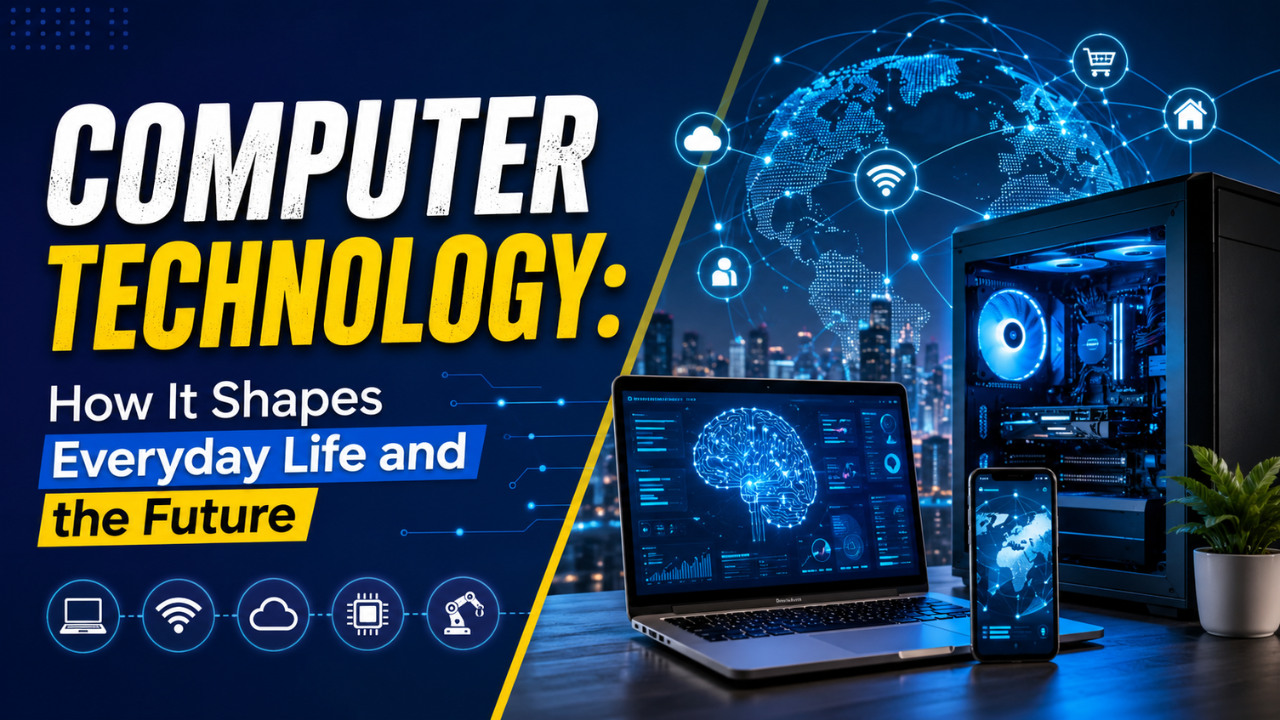
Computer Technology: How It Shapes Everyday Life and the Future
Technology used to feel like something reserved for scientists, engineers, or giant companies. That’s no longer true. Today, computer technology quietly powers almost everything we do. From checking the weather on your phone to ordering groceries, attending online classes, or running a business, computers are working behind the scenes every second.
What’s interesting is that most people use computer technology every day without thinking much about it. You don’t have to build a computer or write software to benefit from it. Simply using a smartphone, paying with a debit card, or streaming a movie means you’re relying on powerful computing systems.
The pace of change can feel overwhelming at times. One year a device feels brand new, and the next it’s already outdated. Still, understanding the basics helps you make smarter choices, whether you’re buying a laptop, protecting your personal data, or learning new digital skills.
Table of Contents
- What Computer Technology Really Means
- How Computers Became Part of Daily Life
- Why Computer Technology Matters More Than Ever
- The Devices Behind Modern Computing
- Everyday Uses That Often Go Unnoticed
- Challenges That Come With Digital Progress
- Looking Ahead Without Guessing the Future
- Final Thoughts
What Computer Technology Really Means
At its core, computer technology is the combination of hardware, software, and networks that allow computers to process information and solve problems.
The hardware is the physical machine you can touch. Think of laptops, desktop computers, tablets, servers, and even smartwatches. Software gives those devices instructions. Without software, even the fastest computer is just an expensive box sitting on a desk.
Then there’s networking. Computers become far more useful when they communicate with one another. That’s why the internet changed everything. Instead of isolated machines, we now have billions of connected devices sharing information instantly.
Here’s a simple example. Imagine taking a photo on your phone. Within seconds, it appears on your laptop, gets backed up online, and can be shared with family across the world. Several layers of computer technology make that happen almost instantly.
How Computers Became Part of Daily Life
Not long ago, many homes had just one family computer sitting in the corner of the living room. Everyone took turns using it.
Now things are different.
Many people carry more computing power in their pocket than older desktop computers ever had. Phones, watches, televisions, gaming consoles, cars, and even kitchen appliances now contain computer systems.
Think about a typical morning. Your alarm goes off. You check messages, read the news, maybe ask a voice assistant about today’s weather. On the drive to work, navigation apps suggest faster routes based on live traffic. At the office, cloud-based software keeps projects moving.
None of this feels extraordinary anymore. That’s actually the biggest success of computer technology. It has blended into daily life so naturally that most people barely notice it.
Why Computer Technology Matters More Than Ever
Computer technology isn’t just about convenience. It creates opportunities.
Businesses use computers to organize inventory, communicate with customers, analyze sales, and improve decision-making. Schools provide digital learning platforms that make education accessible beyond classroom walls. Hospitals rely on computer systems to manage patient records and support medical professionals.
Even small businesses benefit.
A local bakery can accept online orders, track ingredients, manage payments, and advertise through social media—all with affordable computer tools that weren’t available years ago.
On a personal level, computer technology opens doors to learning. Someone interested in photography can watch tutorials, edit images, join online communities, and even sell their work from home.
That’s a remarkable shift when you stop and think about it.
The Devices Behind Modern Computing
When people hear the word “computer,” they often picture a desktop PC. In reality, computing happens across a wide range of devices.
Laptops remain popular because they balance performance and portability. They’re useful for work, school, programming, and creative tasks.
Desktop computers still have their place, especially for professionals who need more processing power or easier upgrades.
Tablets offer a lightweight option for reading, drawing, presentations, and entertainment.
Smartphones have become miniature computers capable of handling banking, photography, communication, navigation, and shopping from almost anywhere.
Behind the scenes, servers play an equally important role. They store websites, process online requests, and keep cloud services running around the clock. Most people never see these machines, yet they make everyday digital experiences possible.
Everyday Uses That Often Go Unnoticed
Some of the best examples of computer technology are the ones we rarely think about.
When you tap a payment card at a checkout counter, computers verify the transaction within seconds.
When you search for a restaurant nearby, mapping systems calculate routes using enormous amounts of real-time data.
Streaming platforms remember where you paused a movie. Email services filter unwanted messages before they reach your inbox. Online stores recommend products based on browsing habits.
These tasks happen so quickly that they feel almost effortless.
Let’s be honest. Few people stop to appreciate the complexity behind something as simple as sending a photo to a friend. Yet thousands of systems may work together to complete that action in moments.
Challenges That Come With Digital Progress
Technology solves many problems, but it creates new ones too.
Cybersecurity has become a growing concern because so much personal and financial information exists online. Weak passwords, phishing scams, and fake websites continue to catch people off guard.
Privacy is another important topic. Many online services collect data to improve user experiences, but people should understand what information they’re sharing and why.
Electronic waste is also becoming difficult to ignore. Millions of devices are replaced every year, creating environmental challenges if they’re not recycled responsibly.
There’s also the issue of digital balance.
It’s easy to spend hours staring at screens without realizing it. Taking regular breaks, spending time outdoors, and maintaining face-to-face relationships remain just as valuable as ever.
Technology should support life, not completely replace it.
Looking Ahead Without Guessing the Future
Predicting technology is never easy.
If someone had described today’s smartphones twenty years ago, many people would’ve laughed. That’s a reminder that innovation often arrives faster than expected.
Still, some trends are clear.
Computers continue becoming faster, smaller, and more energy-efficient. Internet connections are improving, making remote work and online collaboration even smoother. Smart homes are becoming more practical rather than simply being interesting gadgets.
Education is evolving alongside technology as well. Students now have access to interactive learning tools that fit different learning styles instead of relying only on traditional textbooks.
Businesses continue automating repetitive tasks so employees can focus on work requiring creativity and judgment.
At the same time, digital skills are becoming almost as important as reading and writing. Knowing how to search for reliable information, protect personal accounts, and use productivity software gives people an advantage in nearly every profession.
Final Thoughts
Computer technology has become one of the foundations of modern life. Whether you’re running a business, studying for an exam, managing household finances, or simply keeping in touch with loved ones, computers help make those activities faster and more convenient.
The most valuable approach isn’t chasing every new gadget that appears. It’s understanding how technology fits into your own life and learning to use it wisely.
New devices will continue arriving, software will keep improving, and digital tools will become even more capable. But the real value of computer technology isn’t found in the machines themselves. It’s found in how they help people solve problems, stay connected, learn new skills, and create opportunities that were once difficult to imagine.