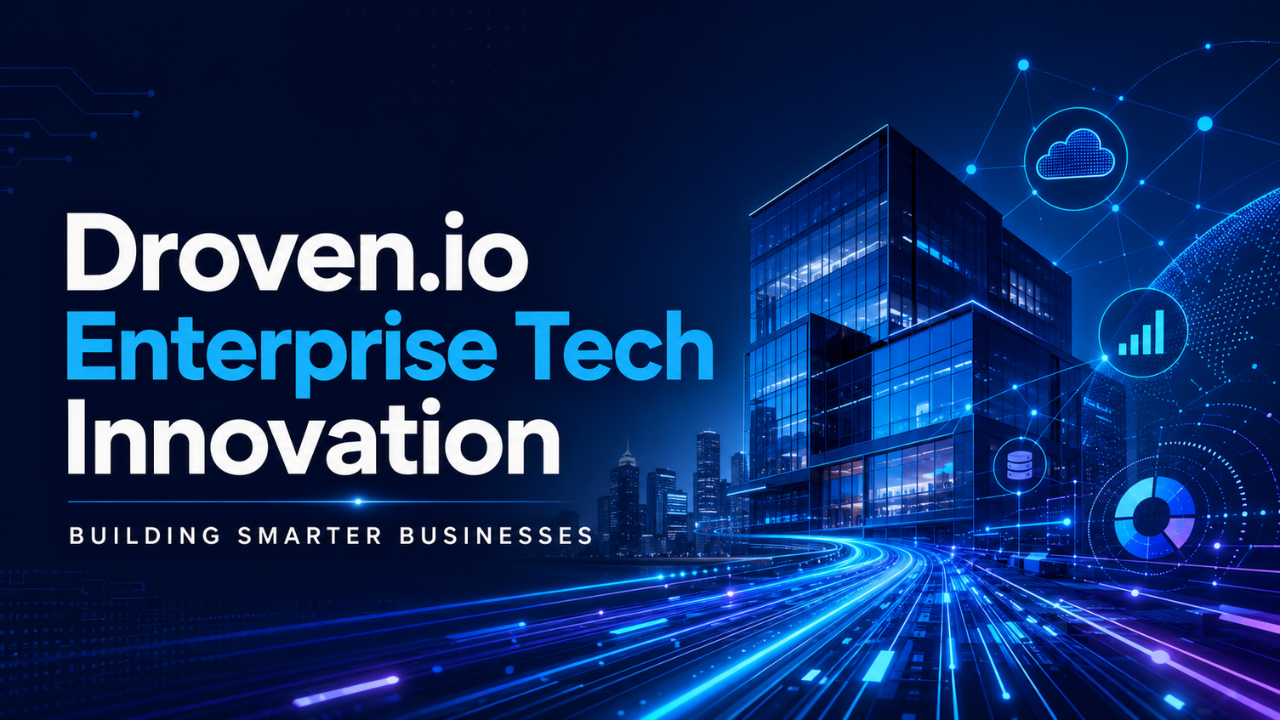
Droven.io Enterprise Tech Innovation: Building Smarter Businesses
Enterprise technology often sounds impressive in a strategy meeting. New platforms, connected systems, real-time dashboards, cloud infrastructure—the language is exciting. The real test, however, comes on an ordinary Monday morning. Can an employee find the information they need? Can a manager spot a problem before it becomes expensive? Can a customer complete a simple task without waiting three days?
That’s where Droven.io enterprise tech innovation becomes meaningful. It isn’t simply about introducing newer tools. It’s about helping a business work faster, make clearer decisions, stay secure, and run more smoothly. The best innovation solves real problems without creating five new ones in the process.
Technology should quietly support the work. When it does, people spend less time fighting systems and more time making useful decisions.
Table of Contents
- What Enterprise Tech Innovation Really Means
- Why Old Systems Hold Businesses Back
- Connecting Technology to Real Business Problems
- Cloud Technology and Flexible Operations
- Better Data Leads to Better Decisions
- Security Must Be Part of Innovation
- Why Employees Decide Whether Technology Succeeds
- Measuring the Real Value of Innovation
- Building for Change, Not Just Today
- Final Thoughts
What Enterprise Tech Innovation Really Means
Enterprise technology covers the systems that help large or growing organizations run their daily operations. These may include customer management platforms, financial software, communication tools, inventory systems, data platforms, and cloud-based services.
Innovation happens when a business improves how those technologies work together.
Let’s be honest: buying a modern platform doesn’t automatically make a company innovative. A business can spend heavily on software and still rely on spreadsheets, repeated data entry, and long email chains. The tools may be new, but the working method remains stuck in the past.
Droven.io enterprise tech innovation focuses attention on the practical side of change. A successful technology project should remove friction. It might shorten an approval process, connect two previously separate departments, or give decision-makers a clearer view of company performance.
Imagine a sales manager who receives a report every Friday. By the time it arrives, the numbers are already outdated. A connected reporting system could provide the same information instantly. That isn’t flashy, but it changes how quickly the manager can respond.
Real innovation often looks simple from the outside. That’s usually a good sign.
Why Old Systems Hold Businesses Back
Many companies still depend on legacy systems built years or even decades ago. Those systems may continue to work, so replacing them can feel unnecessary. The trouble is that “still working” isn’t the same as working well.
An old system might store important customer information but refuse to connect with a newer billing platform. Employees then copy data manually between the two. That creates delays, increases the chance of mistakes, and wastes hours every week.
Legacy technology can also make growth harder. A system designed for 50 employees may struggle when the company reaches 500. Adding new locations, services, or customer channels becomes increasingly complicated.
Still, replacing everything at once is rarely sensible. Large technology changes carry cost and risk. A better approach is to identify the systems causing the most serious problems and modernize in stages.
One department might begin by replacing a slow document approval process. Another may connect inventory information with sales data. Small improvements can build momentum while keeping daily operations stable.
The goal isn’t to chase every new trend. It’s to stop outdated technology from controlling what the business can achieve.
Connecting Technology to Real Business Problems
Here’s the thing: enterprise innovation should begin with a problem, not a product.
A company shouldn’t adopt technology simply because competitors are using it. Leaders first need to understand where work slows down, where customers become frustrated, and where information gets lost.
Consider a logistics company receiving frequent calls from customers asking where their shipments are. The obvious response may be to hire more support staff. But the deeper problem is a lack of accessible tracking information. A customer portal could reduce calls while giving customers a faster answer.
That solution benefits both sides. Support employees face fewer repetitive questions, and customers no longer need to wait on hold.
Good technology planning asks practical questions:
- Which task consumes more time than it should?
- Where do employees enter the same information twice?
- What causes the most customer complaints?
- Which decisions rely on incomplete or outdated information?
- What could prevent the business from growing smoothly?
These questions keep innovation connected to measurable business needs. They also help prevent expensive projects that look impressive but deliver little value.
Cloud Technology and Flexible Operations
Cloud technology has changed how businesses access, manage, and expand their systems. Instead of keeping every application and file on local servers, companies can use secure online infrastructure that grows with their needs.
That flexibility matters.
Suppose a retail business experiences a major increase in website traffic during the holiday season. Traditional infrastructure may struggle under the pressure. A well-designed cloud environment can increase capacity during busy periods and reduce it when demand returns to normal.
Cloud services also support teams working across different offices or countries. Employees can access approved tools and information without being physically connected to one building.
Yet moving to the cloud isn’t as simple as transferring files and switching off the old server. Businesses must consider access controls, operating costs, regulatory requirements, backup plans, and system connections.
Droven.io enterprise tech innovation makes more sense when cloud adoption follows a clear operational purpose. Some systems may benefit from moving quickly, while others may need a slower or hybrid approach. Flexibility should guide the decision.
Better Data Leads to Better Decisions
Most enterprises collect huge amounts of data. The harder job is turning it into information people can actually use.
Customer records may sit in one system, sales numbers in another, and service complaints somewhere else. Each department sees part of the picture, but nobody sees the whole story.
Connected data can change that.
Picture a company noticing that sales for one product remain strong while return rates quietly increase. A basic sales report might suggest everything is going well. A combined dashboard could reveal the growing problem much earlier.
Managers can then investigate whether the issue comes from product quality, confusing instructions, or inaccurate marketing. The data doesn’t make the decision for them. It gives them a better foundation for making it.
Reliable reporting also reduces arguments over whose spreadsheet is correct. When teams work from consistent information, meetings become more productive and decisions move faster.
Data quality still matters. A polished dashboard built on inaccurate records can create false confidence. Businesses need clear rules for collecting, updating, protecting, and reviewing information.
Security Must Be Part of Innovation
Every connected system creates both an opportunity and a responsibility. As businesses modernize, they must protect customer information, internal records, financial details, and access to essential services.
Security shouldn’t be added at the end of a project. By then, important decisions have already been made.
A new employee portal, for example, should include appropriate access levels from the beginning. A junior employee may need to view certain documents but shouldn’t have permission to download confidential financial records. These details are easier to design early than repair later.
Regular backups, software updates, access reviews, staff training, and incident response plans all support safer innovation. None of these measures attracts much attention when everything works. Their value becomes painfully obvious when something goes wrong.
There’s also a human side to security. An employee may use a weak password because the login process feels difficult, or send a sensitive file through an unapproved app because the official system is too slow. Secure technology must also be practical enough for people to use correctly.
Why Employees Decide Whether Technology Succeeds
A technically strong system can still fail if employees don’t understand it or don’t believe it improves their work.
People naturally resist changes that appear suddenly. If a new platform adds extra steps or arrives without proper training, employees may return to familiar tools. Soon, the company is paying for a modern system while the real work continues through email and spreadsheets.
Early involvement helps. The people performing a task every day often know where the process breaks down. Their feedback can reveal issues that executives or outside consultants may miss.
Imagine an accounts team testing a new invoice system. During a trial, they notice that correcting a supplier’s details requires restarting the entire form. Fixing that problem before launch may save hundreds of hours later.
Training also needs to reflect real work. A general product demonstration isn’t enough. Employees should practise common tasks, understand where to get help, and know why the change is happening.
When people see personal value—fewer repetitive tasks, quicker approvals, clearer information—adoption becomes much easier.
Measuring the Real Value of Innovation
Technology projects need clear measures of success. Otherwise, leaders may focus on whether a system launched on time rather than whether it improved anything.
Useful measurements depend on the original problem. A customer service project might track response time, repeat enquiries, and satisfaction. An operations project could measure processing time, error rates, or downtime.
Cost savings matter, but they aren’t the only result. Faster decisions, stronger security, improved customer experience, and easier expansion can be equally valuable.
Measurements should also continue after launch. Some benefits take months to appear, while unexpected problems may develop as usage grows. Regular reviews give teams a chance to improve the system instead of treating launch day as the finish line.
Building for Change, Not Just Today
Business needs never stay fixed for long. Customer expectations shift, teams grow, regulations change, and new competitors appear. Enterprise technology must be able to adapt without requiring a complete rebuild every few years.
That means choosing systems that can connect with other tools, support additional users, and adjust to new workflows. It also means documenting important decisions so future teams understand how everything fits together.
Droven.io enterprise tech innovation is strongest when it supports continuous improvement. Businesses don’t need to predict every future development. They do need a technology foundation that gives them room to respond.
A flexible company can test a new service, learn from the results, and expand it gradually. A company trapped by rigid systems may spend months requesting basic changes. Over time, that difference becomes a serious competitive advantage.
Final Thoughts
Enterprise innovation isn’t a contest to own the newest technology. It’s the steady work of improving how people, processes, and systems operate together.
The most valuable changes often begin with an ordinary frustration: a delayed report, a repeated task, a disconnected system, or a customer waiting too long. Solve those problems thoughtfully, and technology starts producing real value.
That’s the practical promise behind Droven.io enterprise tech innovation. Modern tools matter, but good judgment matters more. Businesses that connect technology decisions to genuine needs can move faster today while staying ready for whatever comes next.