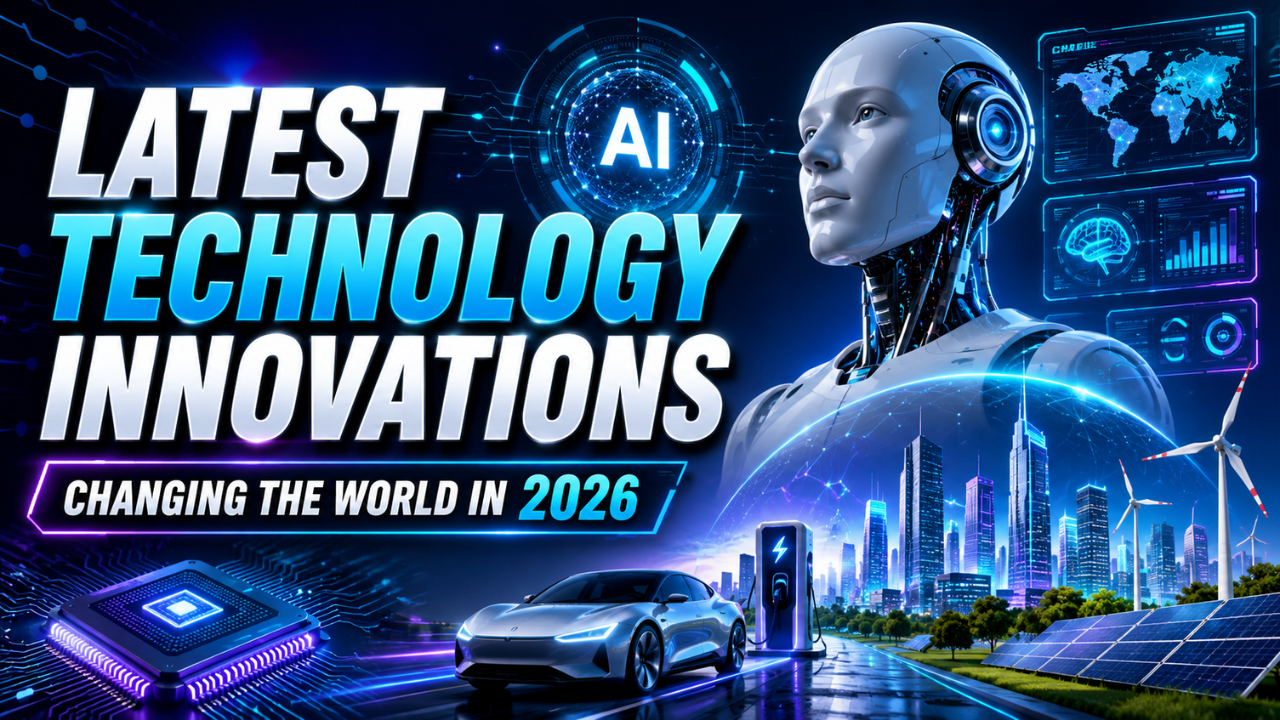
Latest Technology Innovations Changing the World in 2026
Technology rarely changes in one dramatic moment. Most of the time, it gradually becomes part of everyday life without us even noticing. A phone becomes a little smarter, a car gains a feature that used to sound futuristic, or a doctor gets a new tool that spots problems earlier than before. Then, almost without noticing, we start wondering how we ever managed without it.
The latest technology innovations in 2026 are following that pattern, but the pace feels noticeably faster. Smarter computing, advanced robotics, next-generation chips, wearable devices, quantum systems, cleaner energy technology, and increasingly connected homes and cities are moving beyond impressive demonstrations and into practical use.
What makes this period particularly interesting isn’t simply that machines are becoming more powerful. Technology is becoming more useful in the background. The best innovations don’t demand attention every five minutes. They reduce repetitive work, improve decisions, save energy, make transportation safer, or solve a problem before we even notice it.
Table of Contents
- Smarter Computing Is Becoming More Practical
- Robots Are Leaving Traditional Factory Floors
- Wearable Technology Is Moving Beyond Step Counting
- Computing Hardware Is Getting More Specialized
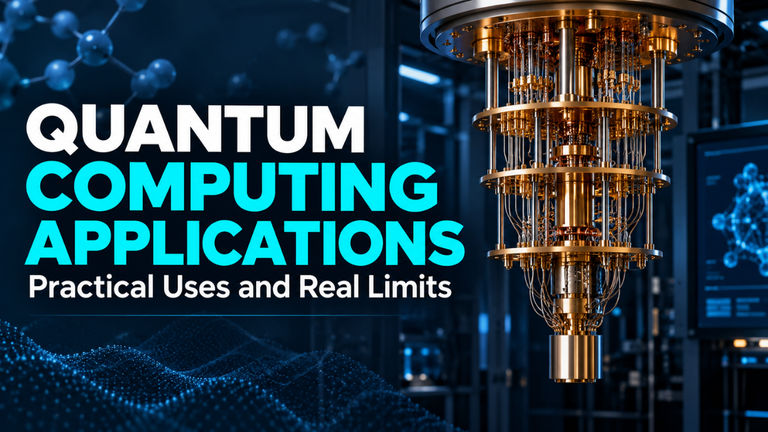
- Quantum Computing Keeps Moving Forward
- Extended Reality Is Finding Practical Uses
- Cars Are Becoming Software-Driven Machines
- Clean Energy Technology Is Improving Fast
- Smart Homes Are Finally Getting Smarter
- Satellite Technology Is Connecting More Places
- Healthcare Technology Is Becoming More Personal
- Cybersecurity Is Adapting to New Threats
- What the Latest Technology Innovations Mean for Everyday Life
Smarter Computing Is Becoming More Practical
One of the biggest technology shifts happening right now is the move toward computing systems that can understand far more complex information and respond more naturally.
The important change isn’t simply raw computing power. Modern systems are becoming better at handling text, images, audio, video, sensor data, and other types of information at the same time. That makes digital tools much more useful in situations where traditional software struggled.
Imagine a small business owner preparing sales reports. A few years ago, they might spend hours exporting spreadsheets, comparing numbers, creating charts, and searching for unusual changes. Newer intelligent software can help organize that information and highlight patterns much faster.
The same idea applies to engineering, healthcare, education, customer service, logistics, research, and creative work.
What’s particularly important is that more processing is also moving directly onto devices. Phones, laptops, vehicles, cameras, and industrial equipment can perform sophisticated tasks locally instead of constantly sending information to distant servers.
That can mean faster responses, better privacy, and less dependence on internet connectivity.
Robots Are Leaving Traditional Factory Floors
Robots aren’t new. Manufacturers have used robotic arms for decades.
What’s changing is where robots can operate.
Traditional industrial robots usually work in carefully controlled environments. Their movements are programmed, their surroundings stay predictable, and people often keep their distance. Newer robotic systems are being designed for much messier real-world conditions.
Warehouses provide a good example. Mobile robots can transport products between storage areas while human workers focus on picking, checking, packing, or maintenance. Some machines can adjust their routes when people or objects appear unexpectedly.
Humanoid robots are attracting attention too. Their human-like shape isn’t merely about looking futuristic. Buildings, stairs, shelves, tools, and workplaces were designed around human bodies. A machine with similar physical capabilities may be able to operate in existing spaces without requiring the entire environment to be redesigned.
Still, let’s be honest: the general-purpose household robot that cooks dinner, folds every shirt perfectly, cleans the bathroom, and fixes a leaking tap isn’t quite standard equipment yet.
But robotics is clearly moving beyond repetitive factory movements.
Wearable Technology Is Moving Beyond Step Counting
Early fitness trackers were fairly simple. They counted steps, estimated calories, and perhaps measured heart rate.
Modern wearable technology is becoming much more sophisticated.
Smartwatches and health-focused wearables can track sleep patterns, blood oxygen levels, heart activity, temperature changes, exercise performance, and other useful signals. Smart rings have also become popular because they can collect information continuously without feeling like another screen strapped to your wrist.
The interesting part is what happens when these measurements are viewed over time.
Suppose your normal resting heart rate suddenly changes for several days. A single measurement might mean very little, but a long-term wearable can compare today’s reading against months of personal data.
That’s where wearables can become genuinely useful: not simply collecting numbers, but helping people notice meaningful changes.
Future devices may become even less visible, appearing in clothing, glasses, patches, earbuds, and medical equipment.
Computing Hardware Is Getting More Specialized
For years, technology companies competed heavily around faster general-purpose processors. That race hasn’t disappeared, but computing is becoming increasingly specialized.
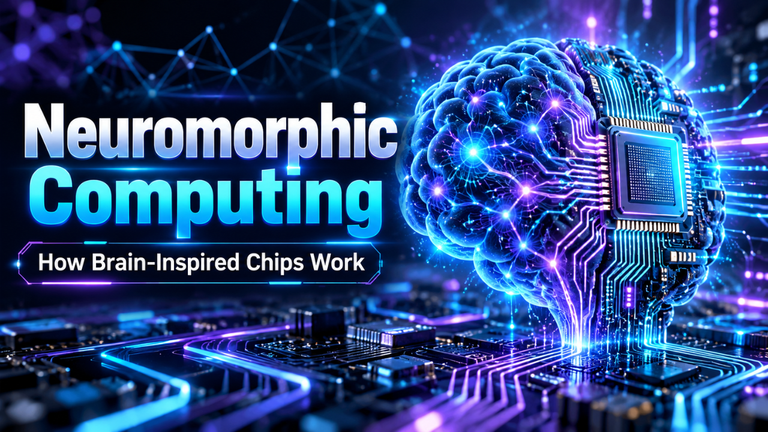
Modern devices may combine CPUs, GPUs, neural processing units, and other dedicated accelerators. Each handles certain workloads more efficiently.
Why should an ordinary user care?
Battery life is one reason.
If a laptop can assign a demanding task to hardware specifically designed for that workload, it may complete the job using less energy. The result could be better performance without turning the computer into a portable heater.
Specialized chips are also appearing in cars, smartphones, data centers, industrial machines, and networking equipment.
At the same time, advanced semiconductor manufacturing continues pushing more computing capability into smaller spaces. Chiplet designs and improved packaging techniques are giving manufacturers new ways to build powerful processors without relying entirely on one enormous piece of silicon.
Quantum Computing Keeps Moving Forward
Quantum computing has spent years sitting somewhere between serious science and futuristic headline material.
It’s now entering a more practical phase, although expectations still need to remain realistic.
A quantum computer doesn’t simply behave like an extremely fast laptop. It uses quantum properties to approach certain mathematical problems differently from conventional computers.
That could eventually matter for areas such as materials research, chemistry, optimization, cryptography, and pharmaceutical development.
The major challenge is reliability. Quantum systems are extremely sensitive, and errors can quickly ruin calculations. Researchers are therefore spending enormous effort on quantum error correction and improving the quality of quantum bits, or qubits.
Don’t expect a quantum laptop on your desk next year. That’s not really the point.
The more realistic future may involve conventional supercomputers working alongside specialized quantum machines for problems where quantum techniques offer a genuine advantage.
Extended Reality Is Finding Practical Uses
Virtual reality once seemed destined mainly for gaming. Augmented reality was often associated with novelty phone applications.
That picture is changing.
Modern extended reality, including virtual, augmented, and mixed reality systems, is becoming lighter, sharper, and more capable of understanding physical surroundings.
Consider an aircraft technician repairing an unfamiliar component. Instead of constantly checking a manual, smart glasses could display instructions directly over the equipment. A medical student could explore a detailed three-dimensional anatomical model. An architect could walk through a virtual version of a building before construction begins.
These aren’t necessarily glamorous applications, but they’re useful.
Comfort remains one of the biggest barriers. Nobody wants to wear a heavy headset for eight hours. Improvements in displays, batteries, cameras, optics, and compact processors will determine how quickly spatial computing becomes part of normal work and entertainment.
Cars Are Becoming Software-Driven Machines
Walk around a modern electric vehicle and you’ll notice something interesting: many of its most important improvements aren’t visible from the outside.
Vehicles are increasingly becoming software-defined machines.
Manufacturers can update navigation systems, battery management, entertainment features, driver assistance, and sometimes vehicle performance through software updates.
Advanced driver-assistance systems are improving as well. Cameras, radar, ultrasonic sensors, high-resolution maps, and increasingly sophisticated onboard computers help vehicles understand their surroundings.
Fully autonomous driving remains a much harder problem.
A vehicle may handle a clear highway beautifully and still struggle with construction zones, unpredictable pedestrians, unusual weather, confusing road markings, or situations that a human understands almost instinctively.
So the meaningful innovation isn’t just “self-driving cars.” It’s the gradual combination of electrification, advanced sensors, better batteries, connected infrastructure, and smarter vehicle software.
Clean Energy Technology Is Improving Fast
Some of the most important technological progress isn’t happening on screens at all.
Battery technology continues improving, driven partly by electric vehicles and renewable energy storage. Researchers and manufacturers are exploring different chemistries that could reduce costs, improve safety, increase energy density, and extend battery lifespan.
Solid-state batteries remain particularly interesting because they could eventually offer advantages over conventional lithium-ion designs, although large-scale manufacturing is still challenging.
Solar technology is evolving too. Higher-efficiency cells allow more electricity to be produced from the same surface area, while improved manufacturing can reduce costs.
Energy storage may be even more important.
Solar panels can’t generate electricity at night, and wind turbines depend on weather. Large batteries and other storage systems can hold excess electricity when production is high and release it later.
That sounds simple, but solving storage economically could transform entire power grids.
Smart Homes Are Finally Getting Smarter
For a long time, the “smart home” often meant owning several gadgets that required five different apps and refused to communicate with each other.
That’s slowly improving.
Connected-home standards are making it easier for devices from different manufacturers to work together. Lights, locks, thermostats, sensors, cameras, appliances, and speakers can increasingly operate as parts of one system rather than isolated gadgets.
The best smart-home technology isn’t necessarily flashy.
Picture leaving for work. The doors lock, unnecessary lights switch off, the heating or cooling adjusts, and security sensors activate automatically. Nothing dramatic happens. You simply don’t have to think about it.
That’s a good example of useful innovation: technology disappearing into the routine instead of creating another chore.
Satellite Technology Is Connecting More Places
Internet connectivity used to depend heavily on cables and nearby cellular towers. Low-Earth-orbit satellite networks are changing that equation.
Because these satellites orbit much closer to Earth than traditional communications satellites, they can provide broadband connections with lower latency.
The biggest impact may be felt far away from major cities.
Remote communities, ships, farms, research stations, disaster zones, and isolated businesses can gain connectivity in places where installing traditional infrastructure would be difficult or expensive.
Direct satellite communication with ordinary mobile devices is developing as well. Over time, losing cellular coverage may become less of a problem as phones gain limited satellite connectivity for messages, emergencies, and eventually broader communication.
Healthcare Technology Is Becoming More Personal
Healthcare may be one of the areas where technological innovation matters most personally.
Modern imaging equipment can produce incredibly detailed views of the body. Robotic surgical systems allow precise movements during certain procedures. Remote monitoring devices let medical teams track some patients without requiring constant hospital visits.
Genomics is pushing medicine toward greater personalization.
Two patients may have what appears to be the same disease but respond differently to treatment because of biological differences. Better genetic analysis could help doctors choose treatments based more closely on an individual’s characteristics.
Digital health devices are helping move some monitoring outside clinics too.
A patient recovering at home, for example, might use connected equipment to record important measurements. Instead of waiting weeks for the next appointment, unusual changes could potentially be noticed sooner.
Technology won’t replace good medical judgment. But it can give healthcare professionals better information at the right moment.
Cybersecurity Is Adapting to New Threats
Every new connected device creates convenience, but it can also create another potential security weakness.
That’s why cybersecurity innovation has become just as important as faster processors or smarter gadgets.
Modern security systems increasingly focus on continuous verification rather than assuming someone is trustworthy simply because they entered the correct password once.
Passkeys are another meaningful improvement. Instead of relying on passwords that people reuse, forget, or accidentally hand to phishing websites, passkeys use cryptographic authentication tied to trusted devices.
Security teams are also preparing for a future where powerful quantum computers could threaten some existing encryption methods. Post-quantum cryptography is being developed to protect information against those future capabilities.
It’s not the most exciting technology to show your friends. But when your banking, work, identity, photos, and personal communications are digital, security matters enormously.
What the Latest Technology Innovations Mean for Everyday Life
The most interesting thing about the latest technology innovations isn’t any single gadget. It’s how different technologies are beginning to work together.
Better chips make wearables more capable. Improved batteries make electric vehicles and robots more practical. Faster networks connect remote devices. Advanced sensors give machines better awareness of their surroundings. New security systems protect those connections.
And gradually, yesterday’s futuristic idea becomes something ordinary.
That’s usually how real technological progress works. The inventions that matter most aren’t always the ones that look spectacular on launch day. They’re the ones that quietly become useful enough that, a few years later, we can’t imagine going back.