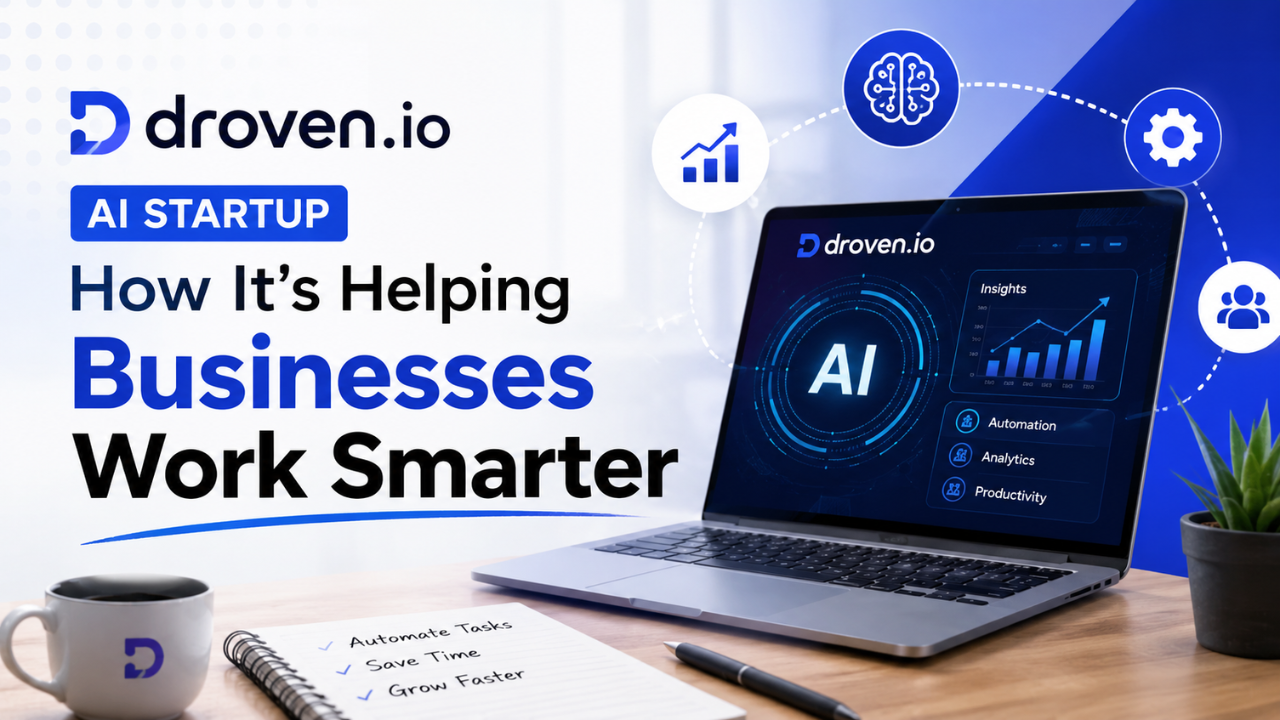
droven.io AI Startup: How It’s Helping Businesses Work Smarter
Some startups appear overnight, create a wave of excitement, and then quietly disappear. Others build momentum because they solve real problems that businesses face every day. The droven.io ai startup belongs to the second category. Instead of chasing flashy headlines, it focuses on helping companies make smarter decisions with better data and streamlined workflows.
That approach has caught attention across different industries. Business owners, startup founders, and operations teams are always looking for practical ways to save time without sacrificing quality. When a platform promises to simplify complicated processes, people naturally want to know whether it’s worth paying attention to.
Let’s take a closer look at what makes droven.io stand out, how it works, and why more people are talking about it.
Table of Contents
- What Is droven.io AI Startup?
- Why Businesses Need Smarter Operations
- How droven.io Approaches Business Growth
- Features That Make It Different
- Real-World Use Cases
- Challenges and Things to Consider
- What the Future Could Look Like
- Final Thoughts
What Is droven.io AI Startup?
The droven.io ai startup is a technology company focused on helping businesses organize information, improve workflows, and make faster decisions. Rather than replacing people, its goal is to reduce repetitive work and give teams better visibility into what’s happening across their operations.
Think about a growing business with sales data in one system, customer support in another, and project updates spread across several platforms. It’s a common situation, especially for startups that adopted different tools as they expanded.
Instead of forcing employees to jump between dashboards all day, platforms like droven.io aim to bring useful insights together in one place.
That’s a simple idea, but it can make a noticeable difference.
Why Businesses Need Smarter Operations
Running a company isn’t just about getting more customers. Managing existing work often becomes the bigger challenge.
Imagine a small online business with only fifteen employees. Orders are increasing every month, but so are customer questions, internal meetings, spreadsheets, and reports. Suddenly everyone spends more time searching for information than actually solving problems.
We’ve all seen businesses where someone asks a simple question like, “What’s the latest sales number?” and three different departments give three different answers.
That’s frustrating.
It’s also expensive.
Companies today collect enormous amounts of information, but having data isn’t the same as understanding it. That’s where modern business platforms have become increasingly valuable.
The droven.io ai startup is part of this growing movement toward making business information easier to understand and easier to use.
How droven.io Approaches Business Growth
Here’s the thing.
Business growth isn’t only about working harder. It’s often about removing unnecessary friction.
Droven.io appears to focus on helping organizations identify patterns that might otherwise go unnoticed. Instead of manually comparing reports from multiple systems, users can work from a more unified view of their operations.
For example, suppose a sales team notices fewer customer conversions during a particular month. At first glance, it might seem like demand has dropped.
After looking deeper, they may discover something completely different.
Customer support response times increased.
Marketing campaigns changed direction.
Product inventory became inconsistent.
When information is connected instead of scattered, finding the real cause becomes much easier.
That’s valuable for businesses of almost every size.
Features That Make It Different
Many business platforms promise efficiency. The difference usually comes down to execution.
The droven.io ai startup focuses on making information more actionable rather than simply displaying more charts.
One useful aspect is workflow visibility.
Managers often struggle because they can’t easily see where projects slow down. A team might appear busy, yet deadlines continue slipping. Better operational visibility helps identify bottlenecks before they become major problems.
Another strength is data organization.
Businesses often store similar information across several software platforms. Pulling meaningful insights from disconnected systems usually requires hours of manual work. Bringing those sources together creates a much clearer picture.
Ease of use also matters.
Complex enterprise software sometimes requires weeks of training before employees feel comfortable using it. Companies increasingly prefer platforms that feel intuitive from the beginning.
After all, software only creates value if people actually use it.
Real-World Use Cases
Different industries naturally use business platforms in different ways.
A retail company may track inventory, customer behavior, and sales performance from one dashboard.
A software startup might monitor product development, customer feedback, and engineering progress at the same time.
Even consulting firms benefit from having project timelines, client communication, and financial information connected.
Picture a marketing agency handling twenty client campaigns.
Without centralized information, project managers constantly ask designers for updates, account managers chase deadlines, and leadership waits for weekly reports before spotting issues.
Now imagine those updates becoming visible automatically throughout the workday.
That’s not about replacing communication.
It’s about making communication easier.
Smaller businesses can benefit just as much.
Many founders wear five different hats every day. They’re handling finance in the morning, customer support after lunch, and business development before going home.
Anything that reduces administrative work gives them more time to focus on growth.
Challenges and Things to Consider
No platform is perfect.
That’s worth remembering whenever a new startup gains attention.
Every business operates differently. What works beautifully for one company may not fit another.
Implementation always takes time.
Employees need to adjust to new workflows, managers need to define clear processes, and existing software may require integration.
Some businesses also discover that their biggest challenge isn’t technology at all.
It’s inconsistent internal processes.
If data is inaccurate from the beginning, even the best software can’t produce reliable insights.
Another consideration is company size.
Very small businesses with only a handful of employees may not immediately need advanced operational platforms. A simple spreadsheet might still handle most daily tasks.
As organizations grow, however, complexity increases surprisingly fast.
That’s usually when businesses begin searching for more scalable solutions.
What the Future Could Look Like
Business technology continues evolving at an impressive pace.
Companies no longer want separate tools for every department. They increasingly expect connected systems that reduce manual work while improving visibility across the organization.
The droven.io ai startup fits into this broader shift toward integrated business operations.
Future developments will likely focus on making business information even easier to understand, allowing teams to react faster instead of spending valuable hours gathering reports.
Customer expectations are also changing.
People expect quicker responses, more accurate information, and smoother experiences. Businesses need better internal systems if they want to keep up with those expectations.
Platforms that simplify everyday decision-making are likely to remain relevant as organizations continue growing.
Of course, long-term success depends on execution rather than promises.
The companies that consistently improve their products while listening to customer feedback usually earn lasting trust.
Final Thoughts
The droven.io ai startup represents an interesting example of how modern businesses are trying to simplify increasingly complex operations. Rather than focusing on flashy features alone, the bigger goal appears to be helping organizations spend less time managing information and more time acting on it.
That’s a practical problem worth solving.
Whether you’re leading a growing startup, managing a mid-sized business, or simply interested in emerging business technology, platforms like droven.io highlight an important trend. Companies aren’t just looking for more software anymore—they’re looking for smarter ways to work.
Technology alone won’t guarantee success. Strong leadership, clear processes, and capable teams still matter most. But when the right tools support those fundamentals, businesses are usually in a much better position to grow, adapt, and respond to changing market conditions.
As more organizations continue modernizing their operations, the conversation around the droven.io ai startup is likely to grow alongside the demand for practical, connected business solutions.