Next Generation Technology: What It Means for Everyday Life
Next generation technology is no longer something that belongs only in science fiction movies or giant research labs. It is already changing how people work, travel, learn, shop, and stay connected.
You can see it in a phone that unlocks when it recognizes your face, a car that helps prevent an accident, or a doctor who can check a patient from miles away. These changes may feel normal now, but they would have seemed unbelievable not long ago.
The exciting part is that technology is becoming more useful, faster, and more connected. The difficult part is learning how to use it wisely.
Table of Contents
- What Is Next Generation Technology?
- Why It Is Moving So Fast
- Smarter Devices in Everyday Life
- The Future of Work Will Feel Different
- Healthcare Is Becoming More Personal
- Transport Is Getting Safer and Smarter
- Security and Privacy Still Matter
- How to Prepare for What’s Coming
- Final Thoughts
What Is Next Generation Technology?
Next generation technology means modern tools and systems that go beyond the technology most people currently use. It includes advanced computing, smart devices, fast internet networks, virtual experiences, robotics, clean energy solutions, and automated systems.
But it is not only about having a newer gadget.
A normal light bulb turns on when you press a switch. A smart lighting system can adjust brightness based on the time of day, save electricity, and turn off when nobody is in the room. That small difference shows the bigger idea behind next generation technology: technology that understands, responds, and helps.
Some of these changes are obvious. Others quietly work in the background. A delivery app predicting your arrival time, a bank blocking a suspicious payment, or a map finding a faster route are all examples of smarter technology doing practical work.
Let’s be honest: not every new invention becomes useful. Many products look impressive at launch but disappear after a year. The technologies that last are usually the ones that solve a real problem.
Why It Is Moving So Fast
Technology has always changed, but the pace feels much faster today. One reason is that people, businesses, and devices are more connected than ever before.
Fast internet allows huge amounts of information to move in seconds. Cloud systems let companies store and access data without keeping everything on one computer. Better chips make phones, machines, and vehicles more powerful.
Think about a small business owner in Hyderabad. A few years ago, they may have needed a full office team to manage customer messages, payments, stock, and marketing. Today, they can use a smartphone, online tools, digital payments, and simple software to manage much of it themselves.
That does not mean technology replaces hard work. It changes where the hard work goes. Instead of doing the same task manually for hours, people can spend more time making decisions, serving customers, or improving their business.
The speed can also feel overwhelming. A new app appears, everyone talks about it, and suddenly you feel behind. Usually, you are not behind. You just need to focus on the tools that actually help your goals.
Smarter Devices in Everyday Life
The biggest impact of next generation technology may happen in ordinary places: homes, shops, schools, and offices.
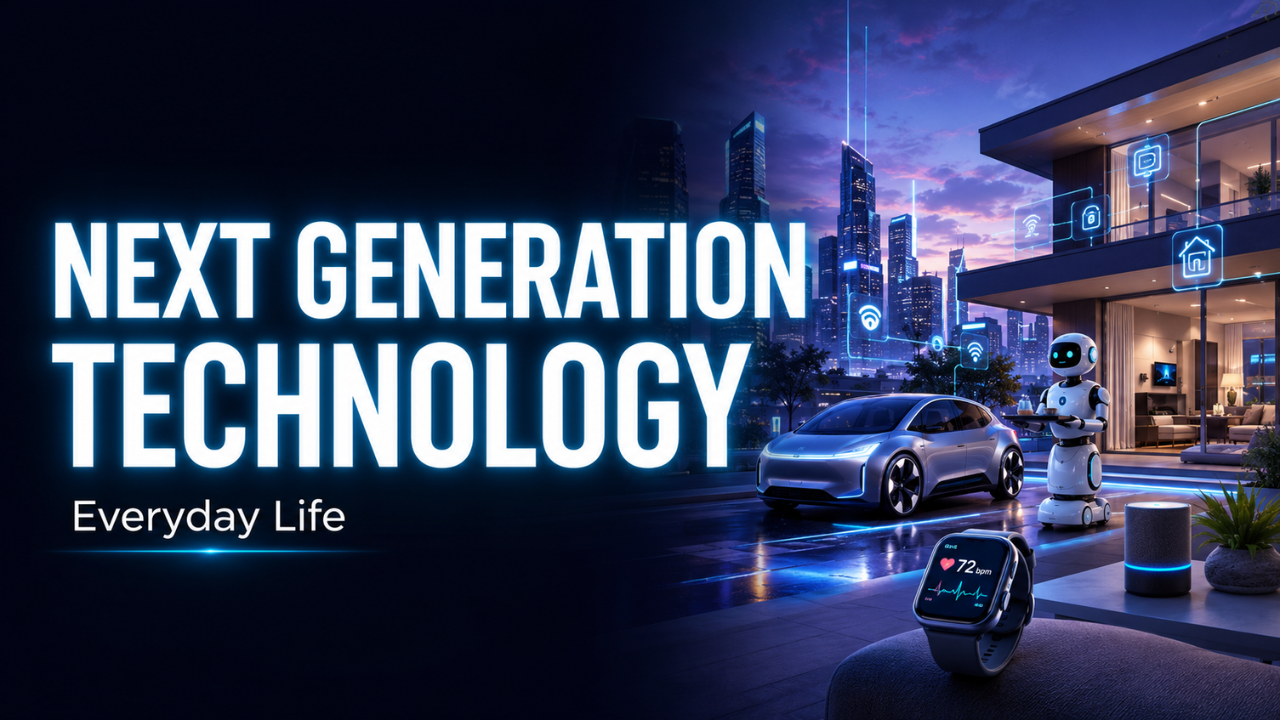
Smart homes are a simple example. You can control lights, cameras, door locks, fans, and appliances from your phone. For some people, that is mostly convenience. For elderly people or someone with limited mobility, it can make daily life much easier.
Wearable technology is also growing. Smartwatches can track steps, heart rate, sleep patterns, and exercise. These devices are not perfect, and they should not replace a doctor, but they can help people notice unhealthy habits earlier.
Imagine someone who sits at a desk for ten hours daily. A watch reminding them to stand up, drink water, or walk for five minutes may sound small. Over months, those small reminders can make a real difference.
Smart devices also help businesses. A shop owner can monitor sales from home. A restaurant can track which items sell best. A delivery company can plan routes that save fuel and time.
The goal should not be to make everything complicated. Good technology should make life simpler, not leave you with ten more things to manage.
The Future of Work Will Feel Different
Work is changing because technology is changing what businesses need.
Many repetitive tasks are now handled through software and automated systems. Data entry, appointment reminders, basic customer support, invoice tracking, and report generation can all happen faster than before.
That may worry some people, and the concern is understandable. When a task becomes automated, certain jobs can change or disappear. At the same time, new roles are created around managing systems, understanding customers, solving problems, and building better services.
The people who do well will not always be the most technical. They will often be the people who can learn quickly, communicate clearly, and use modern tools without depending on them blindly.
For example, an SEO worker who only repeats old backlink methods may struggle as search engines improve. But someone who learns content strategy, site quality, local SEO, research, and client communication becomes far more valuable.
Here’s the thing: technology rewards useful skills. Learning one practical skill at a time is better than chasing every trend.
Skills That Will Stay Valuable
Technical knowledge matters, but human skills still matter a lot. Clear writing, sales communication, problem-solving, trust-building, and creativity are difficult to replace.
A client does not only want a tool. They want someone who understands what they need and can give them a useful result.
That is why next generation technology should be seen as support for skilled people, not a replacement for human judgment.
Healthcare Is Becoming More Personal
Healthcare may benefit more than almost any other field. Modern technology is making it easier to monitor health, connect patients with doctors, and find problems earlier.
Remote appointments are one example. Someone living far from a specialist may no longer need to travel for every basic consultation. They can speak with a doctor online, share reports, and get guidance more quickly.
Hospitals are also using smarter systems to organize records, manage appointments, and support doctors with large amounts of medical information. This can reduce delays and help medical teams focus more on patients.
Wearable devices may alert people when their heart rate is unusually high or when their sleep has become poor. Again, these tools should be treated carefully. A device can provide useful signals, but a trained medical professional should make important health decisions.
Still, the direction is clear. Healthcare is moving toward earlier detection, easier access, and more personal support.
Transport Is Getting Safer and Smarter
Transport is another area where next generation technology will be easy to notice.
Cars already include parking sensors, emergency braking, lane warnings, and cameras that help drivers avoid mistakes. Over time, vehicles may become even better at reading roads, traffic, and dangerous situations.
Smart traffic systems can also reduce congestion. Instead of traffic lights running on the same fixed timing every day, they can respond to actual traffic flow. That could save time, reduce fuel use, and make busy roads less stressful.
Electric vehicles are part of this change too. They are not just about replacing petrol. They push manufacturers to rethink batteries, charging stations, maintenance, and energy use.
There will be challenges. Many countries still need better roads, charging networks, and clear safety rules. But the shift has started, and it is not likely to reverse.
Security and Privacy Still Matter
More connected technology creates more convenience, but it also creates more risk.
When your phone, bank account, smart camera, shopping app, and social media accounts are connected, protecting your personal information becomes very important. A weak password can cause a bigger problem than people expect.
Most people do not need to become cybersecurity experts. Basic habits go a long way:
- Use strong, different passwords for important accounts.
- Turn on two-step verification.
- Avoid clicking unknown links in messages.
- Keep phones and apps updated.
- Be careful about what personal information you share online.
Privacy is not about hiding something. It is about having control over your own information.
A smart device that listens, tracks, or records data may be helpful, but users should know what it collects and why. Companies also have a responsibility to be clear instead of hiding important details in long, confusing terms.
How to Prepare for What’s Coming
You do not need to buy every new device or learn every new platform. That is expensive, tiring, and usually unnecessary.
Start by looking at your own work and daily routine. What task wastes your time? What problem keeps repeating? There may already be a modern tool that can help.
If you run a business, learn basic digital skills: online communication, customer management, security, analytics, and simple automation. If you work online, improve the skills that make clients trust you.
Stay curious, but stay practical.
A person who understands one useful technology well often gets better results than someone who knows a little about twenty different trends. Read, test tools, ask questions, and keep learning at a steady pace.
The future will not arrive in one big moment. It will arrive through small updates, smarter systems, and new habits.
Final Thoughts
Next generation technology is changing everyday life in ways that are both exciting and challenging. It can save time, improve safety, support businesses, and make services easier to access.
The best approach is simple: use technology where it creates real value, protect your privacy, and keep building useful skills. The people who adapt calmly will have more opportunities than the people who fear every change.