
Digital Transformation: A Practical Guide for Modern Businesses
Digital transformation sounds like a big corporate phrase, but the idea behind it is surprisingly simple. It means using digital technology to improve how a business works, serves customers, and makes decisions.
Think about a local retailer that once recorded every sale in a notebook. As orders increased, staff started losing track of stock, customer requests, and supplier payments. Moving those records into a connected digital system didn’t just replace paper. It changed how the entire business operated.
That’s the heart of digital transformation. It isn’t about collecting the newest tools or following every technology trend. It’s about solving real problems, removing unnecessary work, and creating a business that can respond faster when customer needs or market conditions change.
Table of Contents
- What Digital Transformation Really Means
- Why Businesses Can’t Ignore It
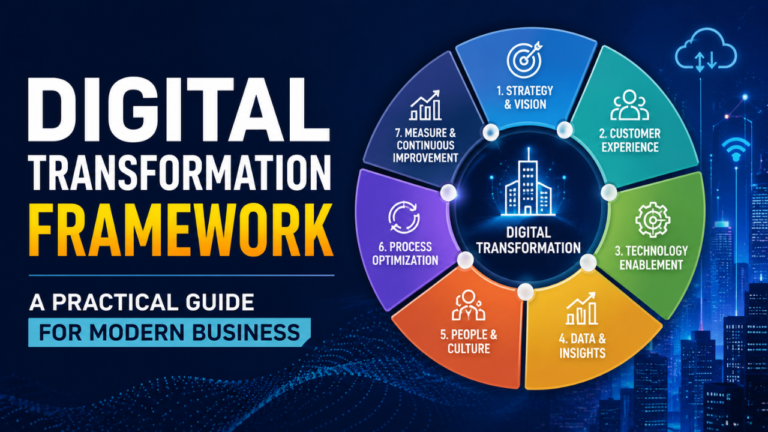
- The Main Areas of Digital Transformation
- Technology Alone Isn’t Enough
- How It Improves the Customer Experience
- Building a Practical Transformation Strategy
- Common Reasons Transformation Projects Fail
- Measuring Real Progress
- Digital Transformation Is an Ongoing Process
What Digital Transformation Really Means
At its core, digital transformation is a business change supported by technology. That distinction matters.
Buying new software doesn’t automatically transform an organization. A company might replace its old accounting program with a modern cloud platform, but if employees still copy numbers manually between departments, very little has actually changed.
Real transformation looks deeper. It examines why a process was created, whether it remains useful, and what changes could make it more effective.
Imagine a customer applying for a service. They complete an online form, email supporting documents, and then call the company to confirm everything arrived. A transformed process might allow them to upload documents, follow the application’s progress, and receive automatic updates from one place.
The technology helps, but the real improvement is a smoother experience for both the customer and the employees handling the request.
Digital transformation can affect almost every part of a business, including sales, marketing, customer support, finance, production, hiring, and supply chain management. It connects information that previously sat in separate systems and gives people a clearer view of what’s happening.
Why Businesses Can’t Ignore It
Customer expectations have changed. People are used to checking an order, booking an appointment, making a payment, or contacting support without waiting for office hours.
When one business makes these tasks simple, customers begin expecting the same convenience elsewhere.
Let’s be honest, most people don’t compare a company’s digital experience only with its direct competitors. They compare it with the easiest online experience they’ve had anywhere. A slow website, confusing payment process, or unanswered support request can quickly push them toward another option.
Internal expectations are changing too. Employees don’t want to spend hours entering the same information into several systems. They want access to accurate data, clear workflows, and tools that help them complete meaningful work.
There’s also the issue of speed. Businesses often need to respond quickly to supply problems, new customer behavior, economic pressure, or unexpected competition. When information is scattered across spreadsheets and disconnected departments, even a simple decision can take days.
Digital transformation gives a business more visibility and flexibility. It doesn’t guarantee success, but it makes adapting much easier.
The Main Areas of Digital Transformation
Transformation looks different in every organization, yet most projects affect a few common areas.
The first is business processes. These are the everyday activities that keep work moving, such as approving invoices, managing orders, scheduling staff, or responding to customer questions. Digitizing repetitive steps can reduce delays and prevent avoidable mistakes.
The second area is customer experience. Businesses can use digital channels to make buying, communicating, and receiving support more convenient. A customer portal, for example, may allow people to manage their accounts without making repeated phone calls.
Data is another major part. Many companies already collect large amounts of information but struggle to use it. Organizing data within a clear reporting system helps managers identify sales trends, track operating costs, understand customers, and detect performance issues.
Finally, transformation can influence the business model itself. A company that once sold products only through physical stores may open an online channel. A maintenance provider might introduce remote monitoring and charge customers through a subscription plan. In cases like these, technology creates an entirely new way to deliver value.
Technology Alone Isn’t Enough
Here’s the thing: digital transformation is mostly a people and process challenge.
A business can purchase an excellent platform and still get disappointing results if employees don’t understand why the change is happening. People may avoid the system, create their own workarounds, or return to familiar methods.
That resistance isn’t always stubbornness. Sometimes the new process genuinely makes their work harder. Leaders may select a tool without speaking to the people who’ll use it every day. Important steps get missed, training feels rushed, and frustration grows.
Successful change usually begins with listening. What slows employees down? Where do customers become confused? Which tasks create the most errors? These conversations reveal problems that senior managers may never see directly.
Clear communication matters as well. Employees need to know what will change, how it will affect their roles, and what support they’ll receive. Training shouldn’t be a single presentation before launch. People need time to practice, ask questions, and build confidence.
Technology delivers the best results when it fits naturally into the way people work.
How It Improves the Customer Experience
Customers rarely care which systems a company uses behind the scenes. They care about the result.
Can they find accurate information quickly? Is the checkout process simple? Can they contact support without repeating the same details to three different people?
Digital transformation helps connect these moments. When sales, support, and order information sit in one system, employees can understand the customer’s history and provide a more useful response.
Picture someone contacting an online store because a package is late. In a disconnected business, the support agent may need to call the warehouse and then contact the delivery company before giving an answer. With connected systems, the agent can see the order status immediately and explain the next step during the first conversation.
Small improvements like this build trust.
Personalization can also become more useful when handled carefully. A business might recommend relevant products based on a previous purchase or remind a customer when a regular service is due. The goal isn’t to overwhelm people with messages. It’s to use available information to make their experience easier.
Building a Practical Transformation Strategy
A good transformation strategy starts with a business problem, not a shopping list of tools.
Instead of saying, “We need a new platform,” a team might say, “Customers are waiting four days for order confirmation, and we need to reduce that to a few hours.” That gives the project a clear purpose and a measurable target.
Next, examine the full process. Delays often come from several small issues rather than one obvious failure. An approval may sit in someone’s inbox, information may be entered twice, or employees may not know who owns the next step.
Once the problem is understood, choose a focused starting point. Trying to transform every department at once creates confusion and increases risk. A smaller project allows the business to test its approach, learn from mistakes, and demonstrate value.
For example, a company could begin by improving customer onboarding. It might replace printed forms with secure online forms, introduce automatic progress updates, and create a shared dashboard for employees. If the process works well, the same approach can later expand into billing or support.
Leadership should also decide who owns the project. Without clear responsibility, decisions get delayed and problems remain unresolved. Ownership doesn’t mean one person does everything. It means someone keeps the work aligned with its original goal.
Common Reasons Transformation Projects Fail
Many projects struggle because the business focuses on launching the system instead of improving the outcome.
One common mistake is copying an old process into new software. If a process contains unnecessary approvals or repeated data entry, digitizing it may simply make a bad process run slightly faster.
Another problem is unclear scope. A project begins with one reasonable goal, then every department adds extra requests. Costs increase, deadlines move, and the original benefit becomes difficult to see.
Poor data quality causes trouble too. Modern systems depend on reliable information. Duplicate customer records, inconsistent product names, and missing details can produce confusing reports and weaken employee trust in the new setup.
Then there’s the temptation to expect immediate perfection. Even a well-planned change needs adjustment after people begin using it. Real users will find awkward steps that didn’t appear during testing.
The smartest teams treat feedback as part of the project rather than evidence that the project failed.
Measuring Real Progress
A transformation project should be measured by what changed for the business, its employees, and its customers.
Useful measures depend on the original problem. A customer service project might track response times, repeat contacts, satisfaction levels, and the number of issues solved during the first conversation. An operations project could measure order errors, processing time, production delays, or cost per transaction.
Employee adoption is equally important. If only a small percentage of the team uses the new system correctly, positive early results may not last.
Avoid relying on activity numbers alone. Training 200 employees or installing a new platform shows that work happened, but it doesn’t prove that the business improved.
Look for practical outcomes. Are customers completing tasks more easily? Are employees spending less time on repetitive work? Can managers access reliable information faster? Is the company better prepared to respond when circumstances change?
Those answers reveal whether transformation is delivering genuine value.
Digital Transformation Is an Ongoing Process
Digital transformation doesn’t have a permanent finish line. Customer expectations continue to evolve, business priorities shift, and tools improve. A process that works well today may feel slow or outdated a few years from now.
That doesn’t mean a company needs to live in a constant state of disruption. It means leaders should regularly review how work gets done and remain open to sensible improvements.
The strongest approach is usually steady and practical. Start with a meaningful problem. Involve the people closest to it. Improve the process, choose technology that supports the goal, and measure the result.
Done well, digital transformation isn’t about making a business look modern. It makes the business easier to operate, easier to work with, and better prepared for whatever comes next.